Get Full Government Meeting Transcripts, Videos, & Alerts Forever!
Get email alerts on the Education Budget topic
No spam. Unsubscribe anytime.
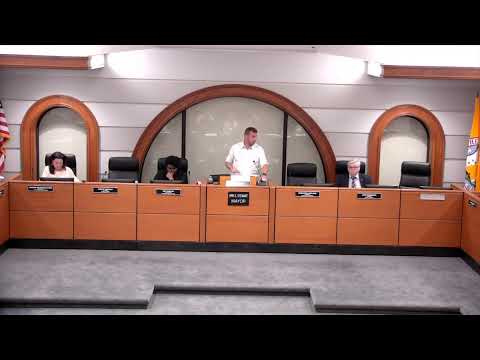
New Britain school leaders warn special-education costs threaten services as council refers budget
Summary
School leaders told the Common Council that rising special-education and transportation costs — combined with uncertain state reimbursements — threaten core services; the council removed the general fund budget from the table and referred it with a neutral recommendation.
School officials told the New Britain Common Council on Tuesday that spiking special-education costs and higher transportation contracts are the largest drivers of a proposed FY25-26 general fund budget and that uncertainty over state reimbursements makes planning difficult.
"These are not optional line items. They are essential services mandated by law and ethics," said Laura Bulki, a New Britain native and district staff member, during the meeting’s public-comment period, urging the council not to approve cuts that would reduce special-education or transportation services. Holmes Elementary Principal Heather Nickel told the council the request was "for survival," saying mounting cuts could make it impossible for principals and teachers to sustain current services.
Dr. Gasper, the district superintendent, described the board’s proposal as a "level services" budget with targeted additions mainly for special education and one assistant principal. He said about one in four students in New Britain now receive special-education services and that local special-education spending has grown substantially — the district’s local special-education spending rose from roughly $45 million to about $57 million in the most recent figures presented. "Special ed is, next to salaries and transportation, the biggest budget driver," he said.
Superintendent and finance staffers explained why some increases are effectively fixed costs: transportation bids came back higher than earlier estimates, and several nonpersonnel lines are contractual. They also warned that the state refund program known as "excess cost" is unpredictable. Dr. Gasper outlined how excess-cost reimbursements kick in only after a district spends 4.5 times its average pupil expenditure and noted that the state reimbursement rate has varied widely in recent years. Depending on final state appropriations, the district estimates swings of several million dollars to its budget outlook.
CFO Ms. Alfano told the council that updated state figures changed the district’s expected "alliance" allocation upward; some staff positions were reclassified into alliance funding this year, which affects how local and state shares show up in the packet. Council members asked for a clear subtraction of any new state revenue from the local request and for a status-quo, line-by-line scenario showing what it would cost to maintain exact current staffing and services.
After questions and technical exchanges about contractual percentages and vacancies, Alderman McNamera moved to call the question. The council removed item 36785-1 (the general fund budget) from the table and, by voice vote, referred it with a neutral recommendation. The council also removed and referred the special revenue funds item (36786-1) and the capital-improvement LOIP item (36444-1) with neutral recommendations.
Next steps: the budget will proceed through the council’s referral process and additional hearings; councilors and the board said they would revisit numbers as the state finalizes excess-cost and alliance allocations.