Get Full Government Meeting Transcripts, Videos, & Alerts Forever!
Get email alerts on the Elections Redistricting topic
No spam. Unsubscribe anytime.
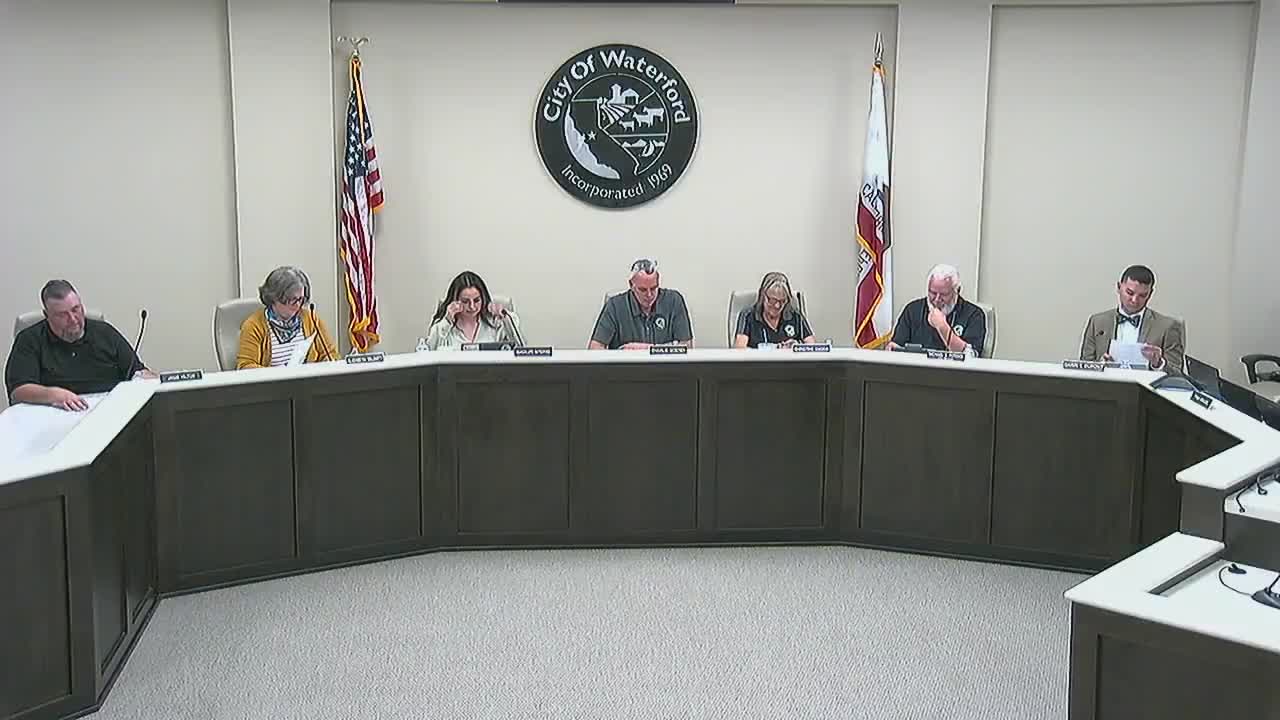
Waterford council directs staff to place proposed district map on November ballot after 3–2 vote
Summary
After a fifth and final public hearing, the Waterford City Council voted 3–2 to direct staff to prepare a November ballot measure that would ask voters to adopt district-based elections using the council’s chosen green map; legal counsel warned taking the map to voters can affect 'Safe Harbor' protections under state election law.
Mayor Goguen moved and the council voted 3–2 to direct city staff to prepare a November ballot measure that would let voters decide whether Waterford should shift from at-large elections to district-based elections using the council’s selected “green” map.
The action followed a presentation by Dr. Johnson, president of the National Demographic Corporation (NDC), who summarized the public mapping process and the legal standards applied, and a short public comment period. Dr. Johnson told the council the purple map had been eliminated earlier in the process and that both remaining maps complied with federal equal-population rules and California’s Fair Maps Act. He said, “If you do decide to go to district elections, then the first two districts will hold an election this November, and the other two districts would hold their first election in 2028.”
Deputy City Attorney Darren DuPont and Dr. Johnson explained the ballot options available to the council. DuPont advised that the city could either (1) place a general question on the ballot and select a specific map only if voters approve, or (2) place a measure on the ballot that includes a specific map and sequencing. He cautioned that including a map on the ballot can reduce some of the legal ‘Safe Harbor’ protections available under state law, potentially increasing litigation risk. DuPont noted prior, mixed outcomes in other California cities and that litigation risk depends on the facts and plaintiffs involved.
In public comment, Amanda Johnson said she was “kind of pro orange map” and urged caution about exposing the city to lawsuits, arguing that litigation expenses can strain a small city’s limited budget.
After a brief council discussion about neighborhood continuity and sequencing options, Mayor Goguen made a formal motion directing staff to return with ballot-authoring documents based on the green map. The motion passed on a roll-call vote recorded as 3–2.
The council did not adopt an ordinance at the meeting; rather, it directed staff to prepare the measure for placement on the November ballot and to return to the council with the necessary documents for formal review and approval. The council also left sequencing decisions (which districts hold elections in which years) to be finalized later if the measure is approved by voters.
What happens next: Staff will draft the ballot measure and supporting materials and return to council for formal approval of the documents that will be submitted to the county for the November election.