Get Full Government Meeting Transcripts, Videos, & Alerts Forever!
Get email alerts on the Riverfront Trestle topic
No spam. Unsubscribe anytime.
Petaluma council weighs options after city review finds no clear ownership of crumbling downtown trestle
Summary
After public pressure to fix the downtown trestle, Petaluma staff reported records showing the rail easement expired and much of the structure sits over state tidelands; the city says it has no record of ownership and will seek partner-driven solutions, agency coordination and a written update to council.
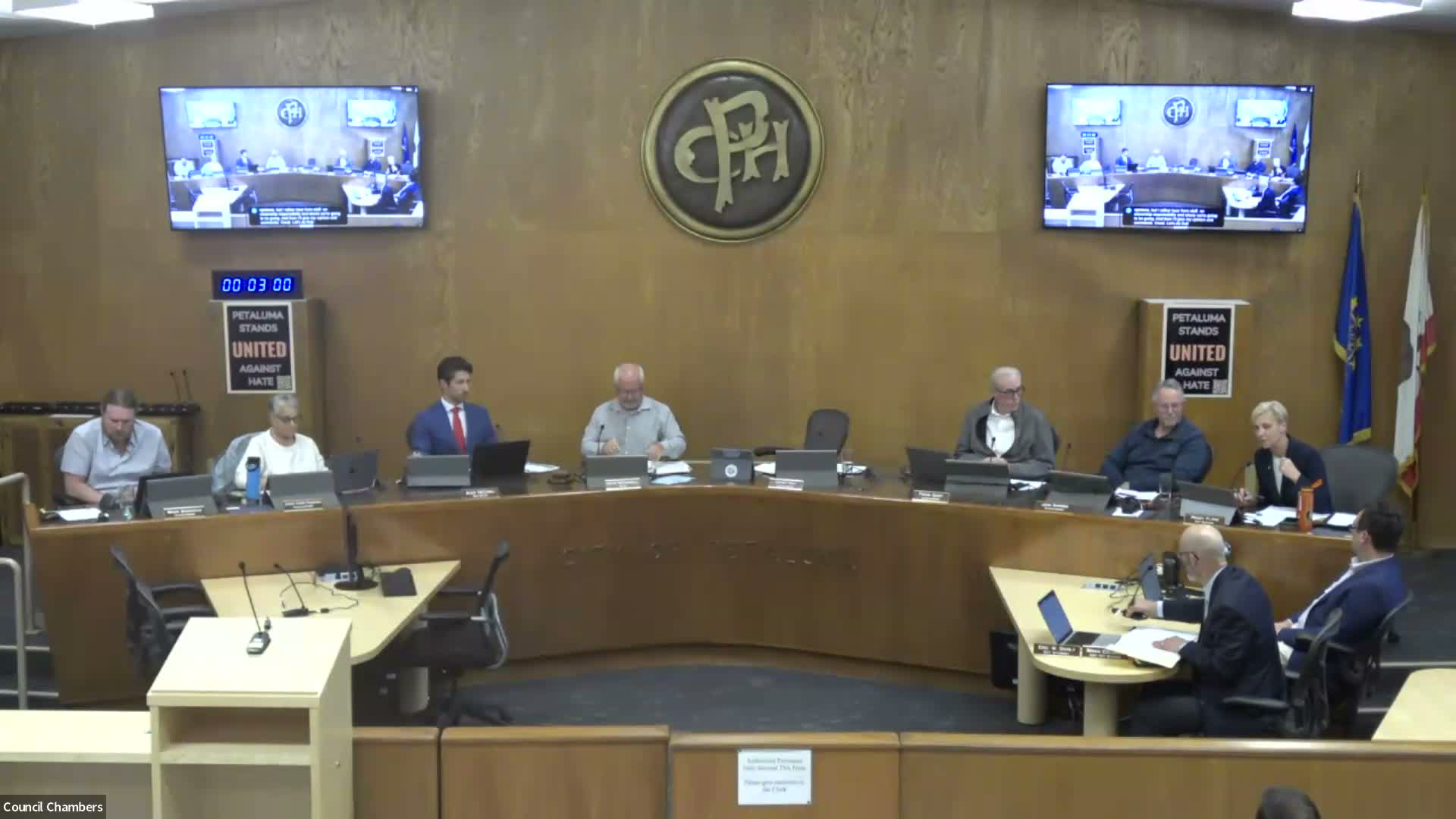
Petaluma’s council spent the largest portion of its March 23 goals-and-priorities workshop on the deteriorating downtown trestle, where residents described the structure as an eyesore, a safety hazard and an economic drag, and staff outlined records and permit work showing the city likely does not control the structure.
City Attorney Eric Danley told the council that title research and a review of historic easements indicate the rail easement granted for the trestle likely expired 90 days after rail use was abandoned and that the land and improvements now appear to overlie state tidelands. “We find no city ownership interest at all either to the land, the wharf, the trestle, or the underlying state lands,” Danley said, adding that successors to the McNear company—identified in records as MKD Great Petaluma Mill LLC—may hold some claims to improvements but that the underlying state trust questions remain.
Gina Benedetti Petnick, assistant director of public works, summarized outreach staff have already done to permitting agencies, saying the city has met with State Lands, the Army Corps of Engineers, U.S. Coast Guard and Fish & Wildlife to clarify regulatory constraints. She said State Lands currently shows no lease authorizing the trestle’s occupancy and that the State Historic Preservation Office will participate in review through Army Corps permitting once an application is submitted. Because ownership and permitting are unsettled, Petnick said staff paused broader public-engagement design work until stakeholders and ownership can be confirmed.
Residents and local organizations urged faster action. Rosemary Hart of the Petaluma Women’s Club asked the council to prioritize the trestle in next year’s budget, hold community visioning sessions and commission an economic impact study to demonstrate benefits of a restored riverfront promenade. Several other speakers described the trestle as “rotting,” an environmental concern and a deterrent to downtown economic vitality.
Councilmembers debated responses for more than an hour. Some members urged an aggressive partnership approach—working with state agencies, private property owners and nonprofit funders—to seize grant opportunities rather than trying to compel action unilaterally. Others urged a two‑phase approach: first remove or remediate immediate public‑safety and environmental hazards, then pursue a longer‑term community vision for replacement or restoration.
Councilmember Kate Thompson asked staff and the city attorney for a written update summarizing what the city has spent on trestle work to date, the ownership findings, which agencies the city has spoken with and recommended next steps. Multiple council members asked staff to open early conversations with the private parties identified in the title review and with State Lands to explore collaborative solutions.
What’s next: staff promised a written report for council that compiles the title research, a summary of agency input and recommended short‑ and long‑term options with estimated costs and funding pathways. The council emphasized that any major funding recommendation would be returned to the body for deliberation and that partnership and grant strategies should be pursued before committing city general fund resources.
Attributions in this article use the meeting’s speaker list (City Attorney Eric Danley, Assistant Public Works Director Gina Benedetti Petnick, and named public commenters). Statements not attributable to a named speaker are summarized from the workshop record.