Get Full Government Meeting Transcripts, Videos, & Alerts Forever!
Get email alerts on the Elections topic
No spam. Unsubscribe anytime.
Waterford holds third public hearing on draft district maps as residents press for better language access
Summary
At a third public hearing on proposed voting‑district maps, consultant Dr. Levitt presented three draft maps that create a majority‑Latino citizen voting‑age district; residents and advocates urged the city to provide translated materials and live interpretation to ensure meaningful participation.
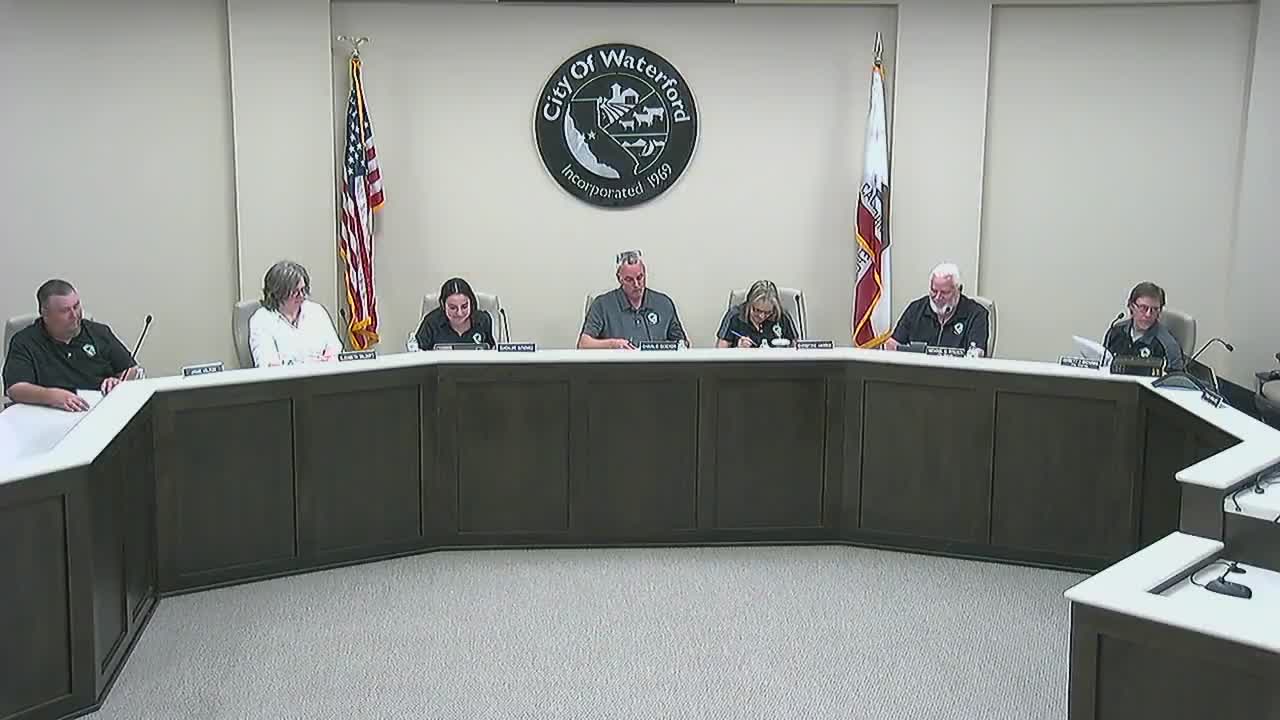
The Waterford City Council on March 2026 held a third public hearing on proposed district maps under the California Voting Rights Act (CVRA) safe‑harbor methodology, during which consultant Dr. Levitt reviewed three draft maps and residents urged improved language access.
Dr. Levitt, the retained consultant, summarized the maps' compliance with federal requirements and said each draft meets contiguity and population‑balance rules, with District 2 a majority‑Latino citizen voting‑age population (CVAP) at roughly 54 percent. He described four scenarios for growth and transportation and said the interactive web map and demographic tools are available for residents to compare options. He reminded the council that any additional public maps must be submitted by the March 9 deadline for posting ahead of the next hearing.
Resident Bianca Lopez told the council the process has not been accessible to many Spanish‑speaking residents and urged the city to provide translated notices, translated attachments and live oral interpretation for hearings and workshops. Lopez cited Section 203 of the federal Voting Rights Act, Title VI civil‑rights obligations tied to federal funding, and state planning requirements, saying in part: "When key materials, notices, and outreach are only provided in English, residents who speak Spanish and other languages may miss hearings, comment periods, and opportunities to shape decisions that affect their representation, their neighborhoods, and their access to housing." She urged the council to delay any final action if required materials remain untranslated.
Another resident who identified herself as Amanda offered brief neighborhood feedback on specific map zones and urged supporters of certain options to submit focused comments for districts 1 and 4.
Council members pressed the consultant on technical questions, including whether selecting a district's election year can shorten or extend incumbents' terms. Dr. Levitt said current members may serve out their elected terms and may also choose to run earlier for a new four‑year term; if a sitting member runs early and wins, that could create a vacancy the council would fill under existing rules. Council members also asked how streets dividing neighborhoods (for example Church Street or Bonnie Brae) would be drawn and whether growth in northern areas (Area 3) was accounted for; Dr. Levitt said the maps were designed with potential growth in mind and can be adjusted at the next redistricting cycle.
City staff and the consultant emphasized the interactive map and outreach calendar and asked for written input by the March 9 deadline so drafts can be posted for the council's March 19 hearing. The hearing was informational; council did not take a final vote at this meeting.
What happens next: the public may submit maps or comments by the stated deadline for inclusion in the next hearing packet; the council will consider revised maps and sequencing decisions at a later scheduled meeting.