Get Full Government Meeting Transcripts, Videos, & Alerts Forever!
Get email alerts on the Elections Districting topic
No spam. Unsubscribe anytime.
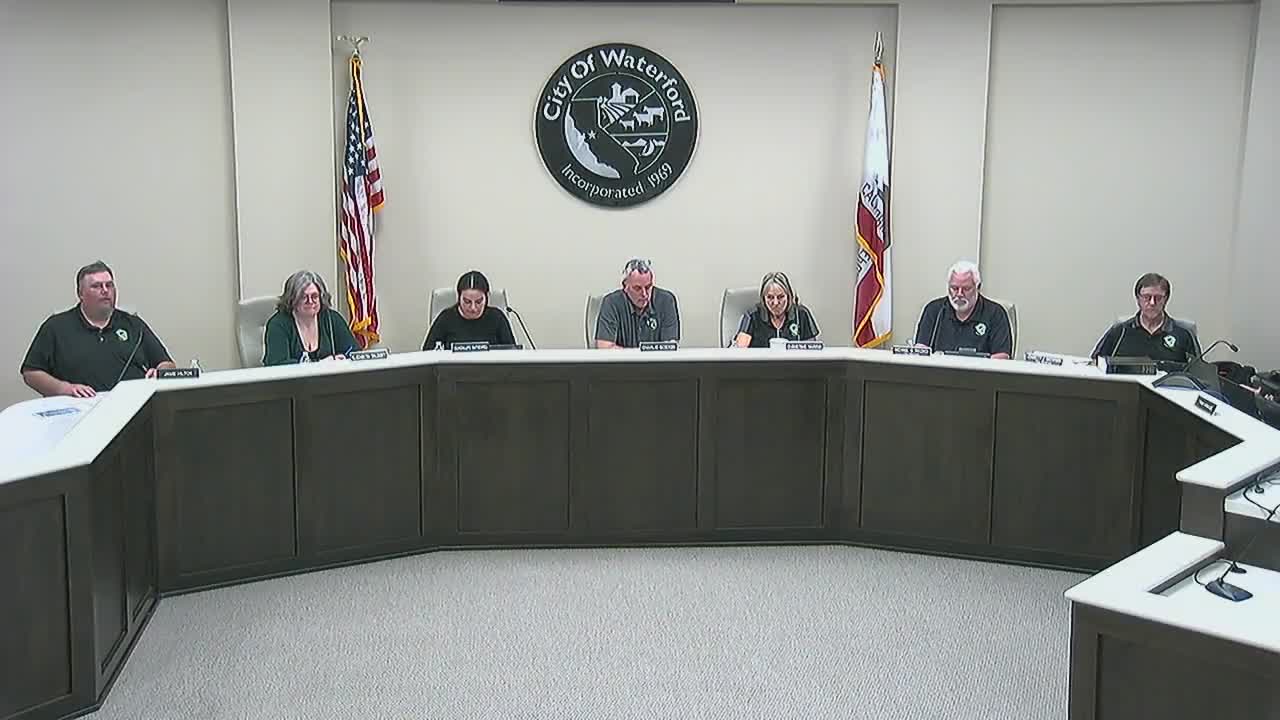
Waterford holds second public hearing on district-based elections, consultant urges community input
Summary
A consultant-led second hearing explained the California Voting Rights Act ‘safe harbor’ process and mapping tools; residents urged stronger bilingual outreach and suggested at least two Latino-majority districts during community input for draft maps.
The Waterford City Council held the second required public hearing on switching from at‑large to district-based council elections and invited public input to inform draft maps. Consultant Levitt outlined federal and state criteria, key deadlines and the online mapping tools available in English and Spanish.
Levitt told the council the process is intended to create a legal 'safe harbor' under the California Voting Rights Act to reduce the risk of costly litigation. He said the city’s required population base for districting uses a state-adjusted 2020 count of 9,149 residents and an ideal district size of about 2,287 residents per district if the mayor remains at-large. “We want input from the community about neighborhoods and communities of interest so we can draw maps that reflect how you see your city,” Levitt said.
Residents urged robust outreach to Spanish speakers and paper-based options for people who are not tech-savvy. Bianca Lopez said the city needs an explicit plan to reach Latino residents and proposed that at least two districts have predominantly Latino citizen voting-age populations. City staff and the consultant said materials are available on the city website and in hard copy at city hall; staff noted an interactive review map and a block-level drawing tool and requested community-drawn maps by Feb. 22 for inclusion in the consultant’s posted drafts.
Council members and staff discussed logistics and outreach. Staff confirmed printed maps are available at city hall, that bilingual materials and an interpreter were provided at hearings, and that the consultant can meet with community groups on request. The consultant outlined a schedule that includes posting draft maps for the March 1 hearing and two opportunities to revise before the council selects a final map by ordinance in April for use in the November election.
What happens next: The consultant will post at least three draft maps, staff will continue outreach and community members may submit maps or comments through the city’s interactive tools and email by the posted deadlines.