Get Full Government Meeting Transcripts, Videos, & Alerts Forever!
Get email alerts on the Water Rates topic
No spam. Unsubscribe anytime.
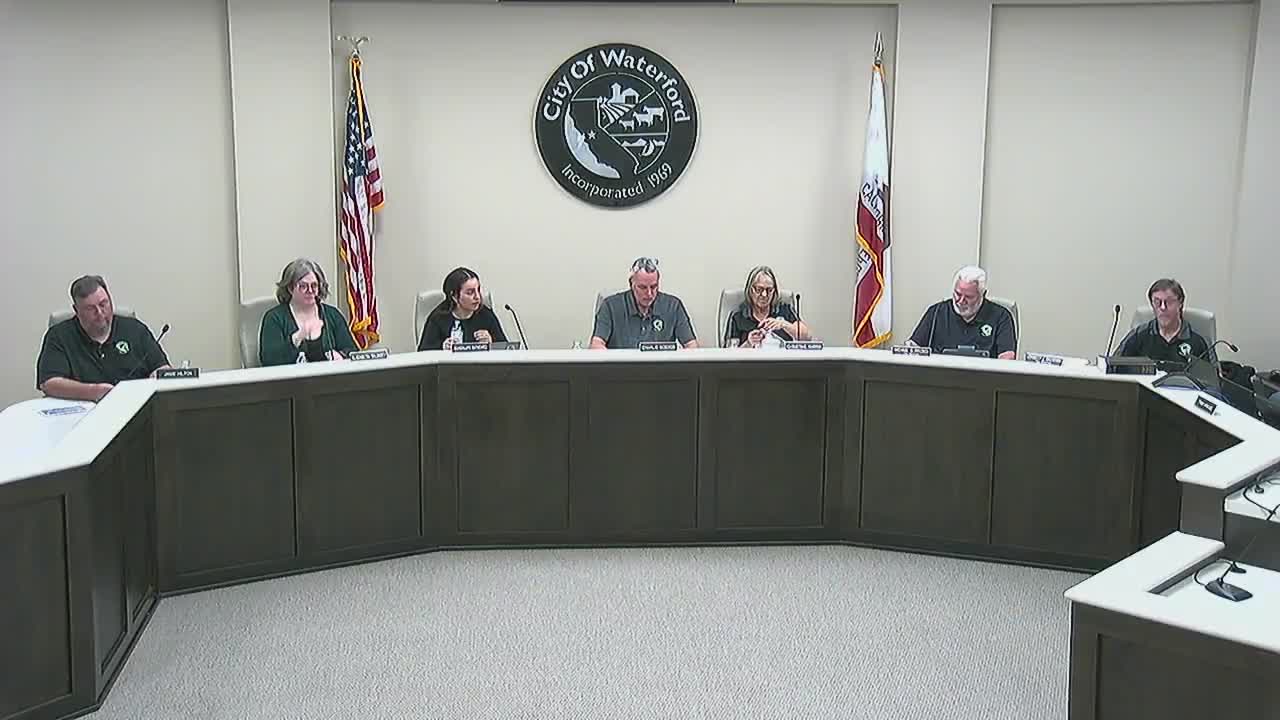
Waterford council adopts five-year water rate plan after public protests fall short
Summary
The Waterford City Council voted 5-0 to approve Resolution 2026-05, a five-year water-rate schedule developed under Proposition 218. Council members, staff and the consultant said the increases are needed to fund aging infrastructure and meet debt and reserve requirements; residents urged alternatives and more transparency.
The Waterford City Council voted 5-0 to adopt Resolution 2026-05, a five-year water-rate schedule that will raise customer bills gradually over five years beginning March 1 if no further legal barrier is raised. Mayor Gokin presided over the action after a public hearing and a consultant presentation.
Allison Lachowicz, the city’s independent rate consultant, told the council the study used industry-standard practices and public audits, and that the city’s combined water service areas total about 2,600 customers. “We are proposing a five-year rate plan,” she said, adding the capital program would spend about $10 million over five years to repair and replace aging mains and wells. Lachowicz said the majority-protest threshold under the Prop 218 notice is 1,381 affected parcels; the clerk later reported 205 protests, well short of that figure.
The nut of the council’s decision was financial sustainability, staff and the consultant said. City staff described constrained reserves — roughly $700,000 across operating and capital funds as of June 30, 2025 — and said bond covenants and debt-coverage requirements make maintaining a minimum fund balance necessary. “We have to monitor that and make sure we’re meeting those obligations,” the city manager said during the council’s questions.
Residents pressed the council for more transparency, targeted relief and alternatives. Christopher Burbank told the council he paid “$1,380 for $74 worth of water” last year and called the fixed fees “unconscionable.” Eric Shandell, a longtime resident, criticized prior consulting work and grant expectations, saying the city has spent roughly $11 million on the system since acquisition and still faces large needs. Bianca Lopez urged better outreach and accessibility for Spanish speakers and suggested charging developers a greater share for system expansion.
Staff answered public questions after the hearing. The city manager said the city has applied for grants but has not been selected for the major grants referenced by some speakers; staff confirmed ARPA funds were used for a local replacement project but that, broadly, grant funding had not materially reduced the planned capital need. Staff also said water and sewer are enterprise (proprietary) funds and cannot be used for unrelated general-fund expenses without council action. The clerk explained that submitted protests are independently tallied; the protest total announced at the meeting was 205.
The council debated senior discounts and whether future grant awards could alter the planned increases. One council member noted any discount must be paid for by other ratepayers or the general fund. After discussion, Council Member Talbot moved to approve Resolution 2026-05; the motion was seconded and passed 5-0.
What happens next: With the council’s adoption and the protest tally below the majority-protest threshold, the city may implement the adopted rate schedule on the dates shown in the notice unless legally challenged. The council said it will continue providing budget materials and the capital-improvement plan in regular budget reports so residents can see how revenues are spent.