Get Full Government Meeting Transcripts, Videos, & Alerts Forever!
Get email alerts on the Vacant Commercial Properties topic
No spam. Unsubscribe anytime.
Red Bluff planners direct staff to draft vacant‑commercial property registration to address long‑term storefront vacancies
Summary
City staff presented a plan to draft a vacant commercial property registration requiring owners or responsible agents to register long‑vacant properties and meet minimum maintenance and security standards; commissioners gave consensus to return with a draft ordinance after staff refines scope and fees.
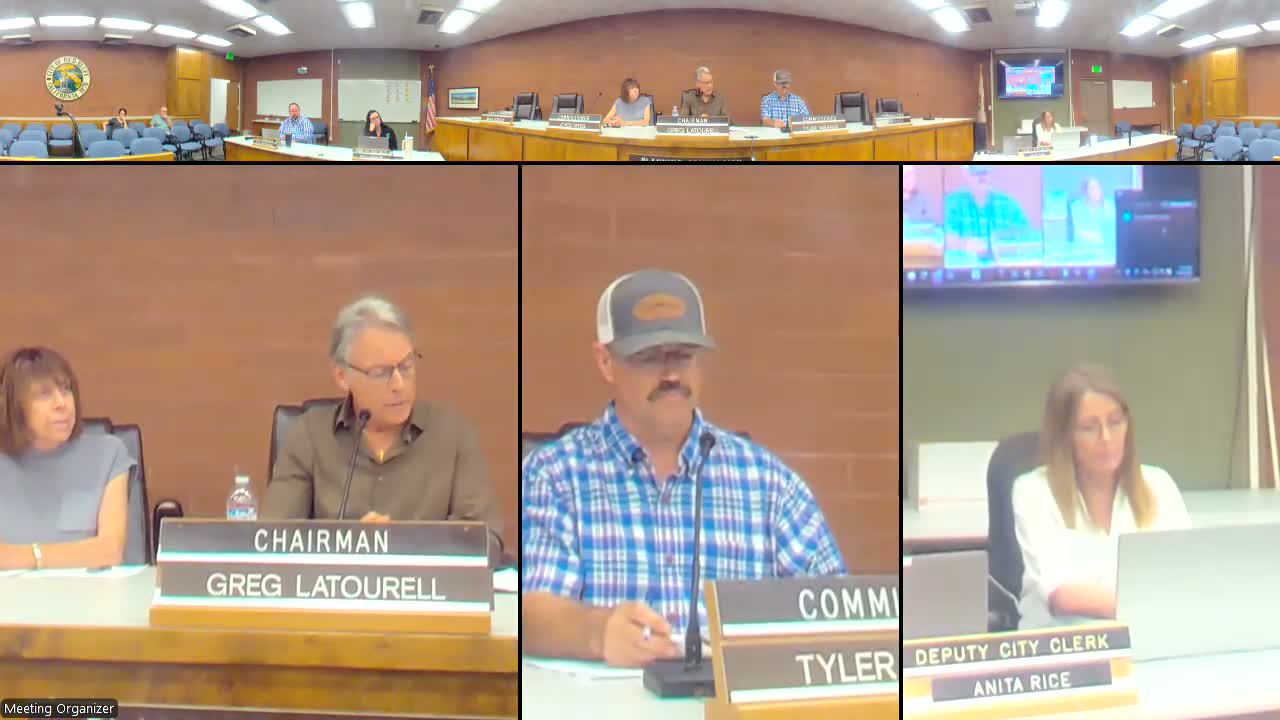
Community development director Beth Lindauer told the Planning Commission on March 24 that staff has observed an increasing number of commercial properties in Red Bluff City that remain vacant for extended periods, particularly along key corridors, and that prolonged vacancy can lead to deterioration and nuisance activity. "The proposed ordinance would establish a registration program for properties that remain vacant beyond a defined timeframe," Lindauer said, noting the program would include minimum maintenance and security requirements and an annual registration fee to help offset enforcement costs.
Commissioners asked detailed questions about who would oversee the program and how it would operate. Lindauer said code enforcement—supported by the building inspector—would be the lead department, and staff would consider folding registration mechanisms into Chapter 15 (nuisance code) or creating a new, complementary process. "We would likely want to inherit some of this ordinance into our existing chapter 15 nuisance code," she said, adding that staff could return with a draft ordinance for formal consideration based on commission direction.
Discussion focused on several operational issues. Commissioners pressed whether the program would be complaint driven or proactive; Lindauer said it could be both, with proactive inspection during business license checks and a reactive complaint pathway. Commissioners and staff discussed registration scope for multi‑suite properties, with staff emphasizing that the immediate goal is to identify a responsible contact—owner, property manager, or designated agent—so the city can address maintenance problems quickly. Exemptions discussed included properties actively under construction or in escrow, and staff said the drafting process would define whether exemptions apply to registration, fees, or both.
Several commissioners voiced concern about appearing punitive to landlords who legitimately cannot find tenants, and about imposing fees without clear administrative justification. One commissioner said retail markets have changed nationwide and warned against punitive measures: "Retail is dead across the country," the commissioner said, arguing for flexibility in any ordinance. Staff and other commissioners said the intent is compliance and community appearance rather than punishment: "The goal is to get in compliance," a staff member said, "not to levy an excessive fee."
Commissioners also highlighted potential benefits of a registration inventory: knowing available spaces would help staff and prospective business owners match space to demand and locate responsible contacts more quickly. The commission asked staff to examine comparable jurisdictions for fee structures, exemptions, and mechanics such as escalating penalties that encourage property owners to return sites to active use.
Chairperson sought consensus to direct staff to draft ordinance language; commissioners indicated general agreement to move forward and asked staff to bring back a drafted ordinance with specifics on scope, fee methodology, and exemptions. The chair opened public comment on the item; no members of the public spoke. Staff said it will return with a draft for formal review at a future meeting.