Get Full Government Meeting Transcripts, Videos, & Alerts Forever!
Get email alerts on the Wildfire Prevention topic
No spam. Unsubscribe anytime.
Petaluma expands targeted grazing across city parks as wildfire prevention tool
Summary
City staff presented plans to scale targeted grazing as a chemical-free vegetation-management strategy, citing pilot results and a grazing master plan due June 30, 2026. Officials said the program reduces fuel, avoids herbicides and will cover more than 300 acres in 2026.
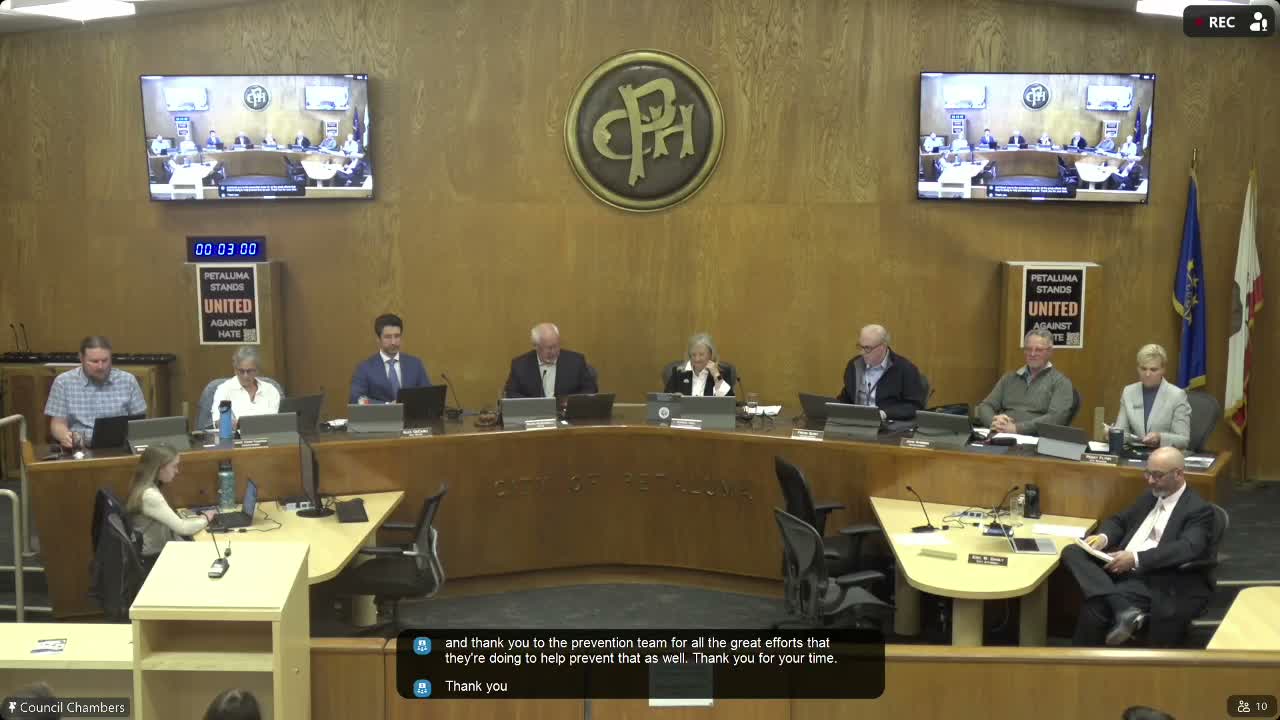
Petaluma city staff told the City Council on April 6 that the city will expand its targeted grazing program in park and open-space sites to reduce wildfire fuels and limit chemical herbicide use.
Senior management analyst Delaina Bradford described a multi‑year rollout that began with a 2023 pilot on about 32.5 acres and expanded in 2024 and 2025. Bradford said the program delivered "meaningful fuel reduction" without chemical herbicide use, generated strong community interest and will grow to more than 313 acres this year, with sites including Lafferty Ranch and pilot work at the Ellis Creek Water Recycle Facility oxidation ponds. She said a grazing master plan that sets site-selection criteria, operational standards and long‑term cost modeling is expected by June 30, 2026.
Bradford said grazing aligns with the city's Integrated Pest Management policy and helps address higher upfront costs for zero-emission landscaping equipment and rising labor expenses. The presentation noted two recurring public concerns: interactions between dogs and grazing animals and program costs. Staff described steps to address those issues, including improved signage, shepherds on site, electric fencing where needed and a planned cost-benefit analysis developed with Casa Grande High School students to quantify avoided wildfire damage and other benefits.
Council members and members of the public asked about alternatives such as volunteer scything teams and whether grazing is more cost-effective. Bradford said the city is exploring partnerships with local scything groups and that students are working to quantify long-term savings, but staff did not present a definitive per-acre cost comparison at the meeting.
Council members expressed broad support for the prevention-focused approach and asked staff to continue refining safety messaging and cost data. Bradford invited residents to events tied to the program, including the Transhumans Festival and a public-facing schedule on cityofpetaluma.org.