Get Full Government Meeting Transcripts, Videos, & Alerts Forever!
Get email alerts on the Tribal Management topic
No spam. Unsubscribe anytime.
Tribal leaders urge Congress to support local management of pinnipeds as predators on salmon
Summary
At Puget Sound Day on the Hill, tribal representatives pressed lawmakers for recognition of treaty-based authority and collaboration to address seals and sea lions eating salmon and hampering recovery efforts.
Tribal representatives told members of Congress that conflicts between pinnipeds (seals and sea lions) and salmon recovery efforts require policy attention that respects tribal treaty rights and seeks practical management options.
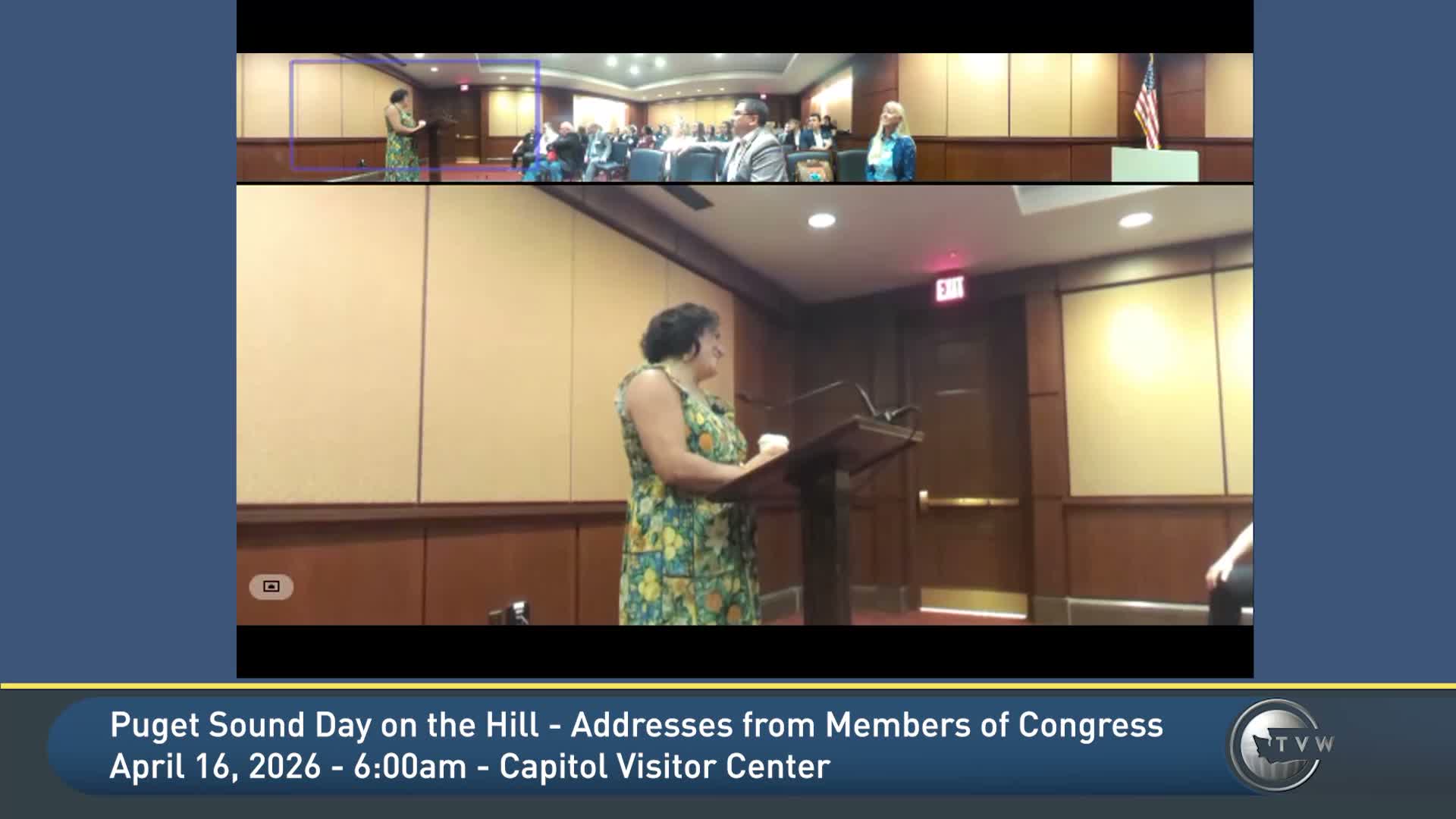
Ed Johnstone, identified himself as chair of the Northwest Indian Fisheries Commission, said tribes are seeking opportunities to participate in, and sometimes to lead, efforts to manage pinniped impacts on salmon runs. "We believe it's under our sovereign authority as holders of those treaties and treaty rights to be involved in actively managing seals and sea lions," Johnstone said, calling for collaboration across the House and Senate and with federal agencies.
Why it matters: Tribal nations in the Puget Sound region have treaty-protected fishing rights and long-standing stewardship roles. Tribal leaders and conservation staff said predators, habitat loss and changing hydrology are combining to depress salmon returns. They urged legislative or administrative responses that would allow agency and tribal cooperation without undermining legal protections.
Responses from Congress: Rep. Emily Randall and other delegation members acknowledged the complexity of balancing species protection, habitat restoration and treaty obligations. "We stand ready to be partners," Randall said, offering her office and staff as resources for legislative work and agency engagement.
Status: Tribal leaders framed the issue as one needing more study and policy attention; there was no formal agreement or legislative action taken at the meeting. Lawmakers encouraged ongoing conversations and technical exchanges to explore policy options that respect tribal sovereignty and scientific management.