Get Full Government Meeting Transcripts, Videos, & Alerts Forever!
Get email alerts on the Composting Facility topic
No spam. Unsubscribe anytime.
0 Waste Sonoma tells Petaluma commission county compost facility feasible but years from operation
Summary
0 Waste Sonoma told the Petaluma Climate Action Commission that a proposed compost facility on county airport land could take several years to finish CEQA and construction, would process roughly 70,000 tons per year and is intended to keep compost within Sonoma County rather than exporting finished product.
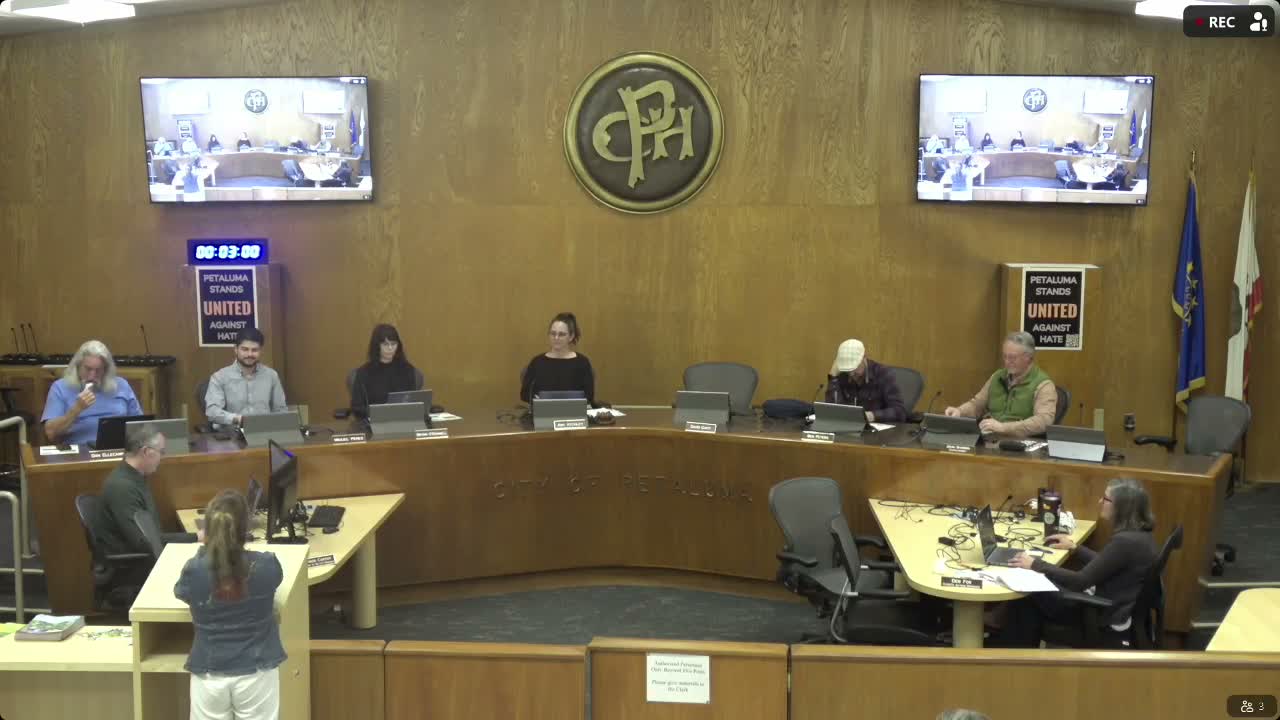
Leslie Lukash, executive director of 0 Waste Sonoma, presented to the Petaluma Climate Action Commission on March 12 about the agency’s work managing organics and the status of a proposed county-level compost facility.
Lukash described 0 Waste Sonoma as a joint powers authority that manages household hazardous waste, organics collection and state-required reporting on behalf of member jurisdictions. She said the state’s SB 1383 (the short-lived climate pollutants action law) requires organics diversion, commercial collection, reporting and enforcement — measures that have driven regional efforts to expand composting capacity.
On a proposed site located on county-owned land near the airport, Lukash said a feasibility study completed in December 2022 found the location feasible. A consultant has completed 30% design work and an RFP is underway to hire a CEQA contractor. She estimated the site would process about 70,000 tons of material; the agency currently manages roughly 90,000 tons a year across multiple facilities and has expanded capacity to handle up to about 120,000 tons via additional temporary sites.
Lukash warned that CEQA and permitting remain major hurdles: the environmental studies could take two years and, if subsequent design and construction proceed without legal challenges, the full project timeline could reach about four years. She also explained contamination is costly to remove and urged improved resident education and collection monitoring (truck cameras and 'lid flips') so finished compost remains marketable.
Commissioners pressed on where material goes now, market demand from agriculture and how the city and Recology might participate; staff and Lukash said the county exports much of the material now and that rebates and outreach are used to stimulate local demand for finished compost. Lukash said the agency intends to be proactive with community outreach once CEQA work begins.
No formal action was taken on the project; commissioners and staff agreed to support outreach and to monitor permitting progress.