Get Full Government Meeting Transcripts, Videos, & Alerts Forever!
Get email alerts on the Regional Planning topic
No spam. Unsubscribe anytime.
SCAG representative outlines Connect SoCal, funding and RHNA role to Moorpark council
Summary
SCAG Regional Councilmember Rocky Rhodes presented the Connect SoCal plan, funding programs and the RHNA process; councilmembers asked about grant feasibility, RHNA allocation and tribal representation, and Rhodes described SCAG’s grant administration and advocacy role.
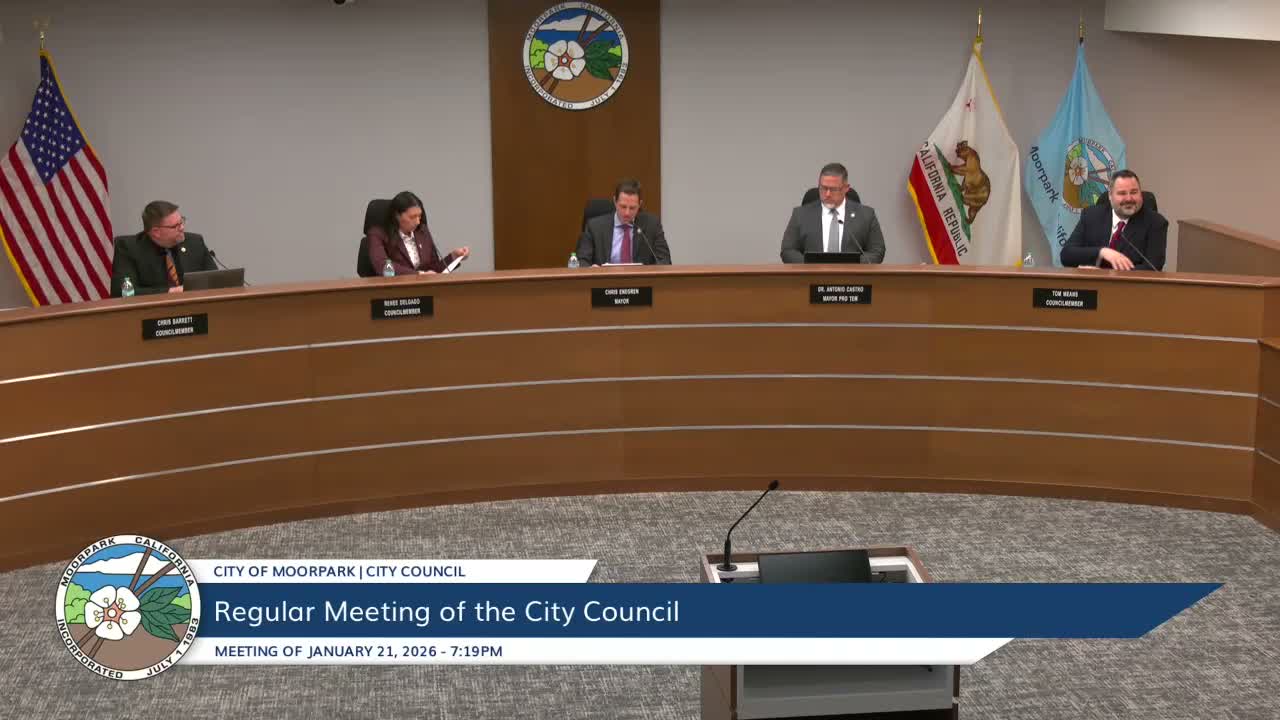
Rocky Rhodes, a Simi Valley councilmember who represents Moorpark on the Southern California Association of Governments (SCAG) regional council, described SCAG’s role in regional planning and funding at the Jan. 21 Moorpark City Council meeting.
Rhodes explained that Connect SoCal, SCAG’s regional transportation and sustainability plan, sets a shared vision through 2050 across mobility, communities, environment and economy. He summarized how SCAG’s planning documents are used to make jurisdictions eligible for federal and state funding and said the agency administers and programs major transportation funds and competitive programs including the Federal Transportation Improvement Program (FTIP), Surface Transportation Block Grant (STBG) and Active Transportation Program (ATP).
Rhodes highlighted numbers from the 2024 Connect SoCal plan and FTIP, including a large multi-year planning and investment envelope; he also described technical assistance SCAG offers — local pilot initiatives, safety-planning tools and data resources — and said staff will begin outreach for the Connect SoCal 2050 update and the next RHNA cycle. Rhodes said SCAG has been advocating in Sacramento to align funding streams and to seek implementation resources.
Councilmembers asked whether SCAG grants impose onerous matching or reporting burdens and whether SCAG can make funds usable by smaller cities. Rhodes said the administrative burden varies by program, with transportation grants typically requiring more detail; he said SCAG’s front-end planning work reduces the complexity for cities by producing studies and programmatic support that jurisdictions can then implement. On RHNA, Rhodes said the state sets the allocation algorithm and SCAG works to allocate the region’s total share among jurisdictions; he said SCAG is advocating to restore interjurisdictional flexibility that existed in prior cycles.
Councilmembers also asked about representation of tribal communities; Rhodes confirmed federally recognized Chumash representation in the SCAG region and offered to follow up with any clarifying details. He encouraged Moorpark staff to use SCAG technical assistance and funding opportunities for transportation projects, active-transportation grants and local planning work.
The presentation concluded with questions about economic-development funding; Rhodes said SCAG’s programs are more focused on regional transportation and housing but noted tools like down-payment assistance programs and large infrastructure investments can indirectly support local economic development.