Get Full Government Meeting Transcripts, Videos, & Alerts Forever!
Get email alerts on the THC Beverages topic
No spam. Unsubscribe anytime.
Committee releases HB373 to regulate THC-infused beverages, but retailers and hemp sellers raise concerns
Summary
House Bill 373 would age-gate, test and tax THC-infused (Delta-9) beverages under a three-tier system and limit Delta-9 to 10 mg per container for off-premise sales; the committee released the bill amid industry debate over milligram caps, retail access and taxation.
Representative Heffernan presented House Bill 373, saying the measure was written with the marijuana commissioner, the Alcohol Beverage Control commissioner and the Department of Finance to require testing, age gating and a three-tier distribution system for THC-infused beverages. Heffernan said the bill would cap total Delta-9 extract at 10 milligrams per container, put beverages through the same supplier-wholesaler-retailer system used for alcohol and tax them at the wholesale level.
Joshua Sanderlyn, identified on the record as Delaware's Marijuana Commissioner, told the committee that many THC beverages are entering the state from out-of-state sources and that products are not consistently tested or tracked. He described the proposal as a public-safety and consumer-protection measure that would allow licensed marijuana retailers to sell beverages after obtaining the appropriate endorsement and ensure testing, traceability and age gating.
Wholesalers, liquor-store operators and some distributors supported the bill, arguing the three-tier system would bring testing, traceability and age verification to a currently unregulated marketplace. Paul Ruggiero of AKS Distributors and the Delaware Alcohol and Beverage Wholesalers Association said the framework would curb counterfeit or untaxed products and create a safer chain of custody.
Small-business and hemp-retail advocates urged the committee to broaden retail access beyond package/liquor stores. Lizzie Gallo, who identified herself as the director of a Delaware nonprofit, said restricting sales to liquor stores would put many small retailers and smoke shops at a competitive disadvantage and called the approach "prohibition all over again." Industry commenters raised concerns about the bill's 10-milligram limit, arguing that much of the current market sells higher-dose products and that strict caps and small-package restrictions could eliminate a large share of existing sales.
Representative Heffernan and Commissioner Sanderlyn said the bill focuses on beverages and testing; Commissioner Sanderlyn noted that hemp-derived products sold in pharmacies and other retailers were not the target and that existing hemp products would remain available under other statutes.
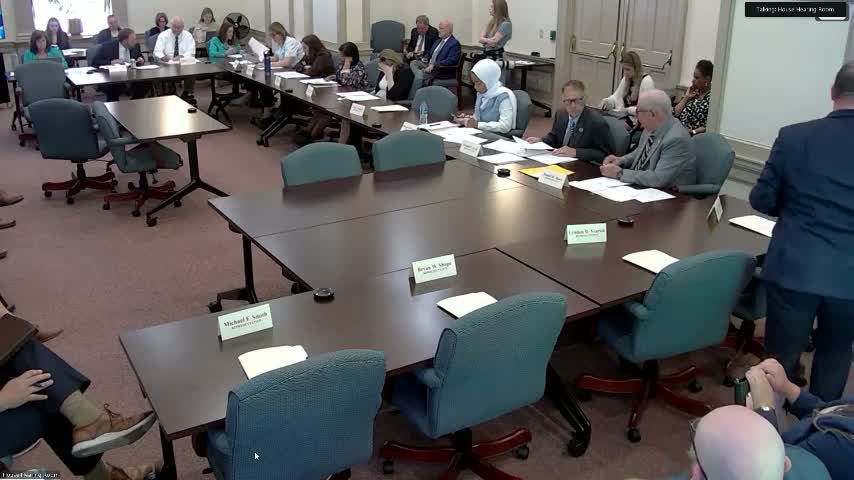
After public comment and questions about implementation timing and tax-system capacity, the committee took a roll call on a motion to release HB373; the chair announced the bill had received sufficient votes to be released from committee. Committee staff and the Department of Finance noted a 90-day implementation window in the bill and urged attention to programming and pacing when multiple tax changes are enacted simultaneously.
Next steps: HB373 will be posted and sent to the floor; supporters and opponents signaled intent to press for changes on milligram limits, packaging and tax rates during subsequent stages.