Get Full Government Meeting Transcripts, Videos, & Alerts Forever!
Get email alerts on the Energy Markets topic
No spam. Unsubscribe anytime.
Wright: gas prices likely peaked; U.S. will use sanctions and exports to blunt disruptions
Summary
Secretary Chris Wright told an interviewer he thinks gasoline prices have likely peaked, said the U.S. is a net oil exporter and defended temporary pauses on Russian oil sanctions to lower global prices, while arguing that decades of spending on wind and solar have not significantly displaced fossil fuels.
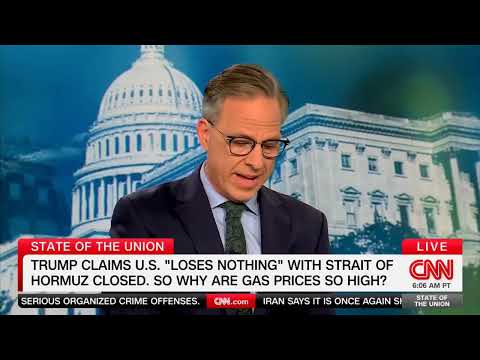
Secretary Chris Wright told an interviewer Wednesday that gasoline prices have likely peaked and that resolving the Iran conflict would push energy prices lower, but he declined to promise when regular unleaded would return below $3 a gallon.
Asked when Americans could realistically expect gas to fall under $3 per gallon, Wright said it could happen later this year or next year, but he would not commit to a date. "That could happen later this year. That might not happen till next year, but prices have likely peaked and they'll start going down," he said.
On global market interventions, Wright explained why a temporary pause on sanctions for Russian oil was extended: he said bankers and delegates at the G20 urged measures to keep energy prices lower in Asia and Europe, and that allowing some Russian oil flows temporarily was intended to reduce near-term price pressure. He said the pause is temporary and that sanctions will return at some point.
Wright also defended the U.S. energy position, saying the United States "produces more oil than we consume" and is by "far and away the world's largest net exporter of natural gas." He said the administration is "driving nuclear forward" and criticized past global spending on wind, solar and batteries, stating that about $10 trillion has been spent on those technologies and that they make up "about 3% of global energy," which he said had not materially reduced price vulnerabilities.
Wright linked a negotiated resolution of hostilities with lower energy prices and reiterated that the administration is using a combination of maritime pressure, sanctions and export leverage to limit adversaries' ability to export energy.
The interview closed with no immediate policy changes announced on domestic fuel subsidies or price controls; Wright framed the expected energy relief as dependent on diplomatic outcomes and market adjustments.