Get Full Government Meeting Transcripts, Videos, & Alerts Forever!
Get email alerts on the Voter Rolls topic
No spam. Unsubscribe anytime.
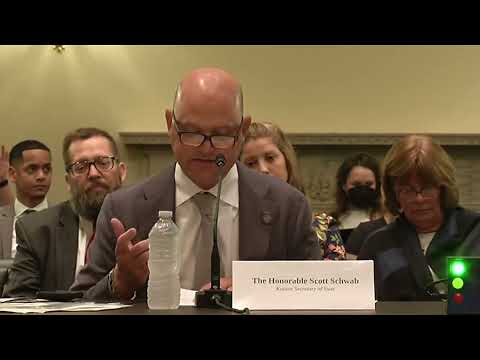
Kansas secretary of state details roll maintenance, cross-state checks and removals
Summary
The Kansas secretary of state told a House committee the state conducts routine voter-roll maintenance for about 2 million registrants, uses multiple data tools to update records, removed more than 5,500 registrations after SSA matches, and is pursuing legislation to expand federal-data checks twice a year.
Kansas Secretary of State testified to the House committee that maintaining accurate voter rolls for approximately 2 million registered voters is a continual priority and described a mix of tools, personnel and legal steps the office uses to identify outdated or ineligible registrations.
"Ensuring voter rolls are maintained in accordance with state and federal laws is critical," the Kansas Secretary of State told the committee, outlining steps the state has taken since 2011, when Kansas enacted voter ID and documentary proof-of-citizenship measures. The secretary said the state has strengthened post-election and procedural audits, tightened physical and cyber security for county election offices, and banned ranked-choice voting.
The secretary said 105 election officials perform daily voter-roll maintenance, and that "approximately 5% of the registrations are updated every federal election due to routine voter maintenance," with about 200,000 new registrants in a typical federal cycle. For removals tied to death, the office relies on three verification sources: weekly state vital-statistics data, a voter's obituary and the Social Security Administration's Death Master File; "Kansas removes about 28,000 registrants annually because of death," the testimony said.
To find voters who moved or who may be registered in multiple states, Kansas uses deduplication and the National Change of Address (NCOA) system and has sought memoranda of understanding with neighboring states to compare lists. The secretary said Kansas ran the Interstate Crosscheck program for about 20 years until it was discontinued in 2018.
The secretary described running the state's rolls through a federal verification tool (referred to in testimony as SAVE/SAFE) and reported removing registrants after independent checks: "More than 5,500 registrants were removed following independent verification of the SSA data," the secretary said, adding the office cross-indexed its voter rolls with Social Security data last fall.
On enforcement, the office refers suspected election crimes, including noncitizen voting, to the state attorney general; the secretary said the attorney general has brought two criminal indictments so far and the secretary's office has referred seven additional suspected noncitizen cases.
The testimony included a cited example in which a non-citizen was discovered serving as mayor of Coldwater, Kansas; that person had registered before the state's documentary proof-of-citizenship law and was grandfathered in, the secretary said. The office is pursuing legislation slated to take effect July 1 that would require the federal verification system to be used twice a year and would require state agencies to report noncitizen applicants for benefits.
The secretary closed by thanking county election officials and federal partners for data access and reiterated the office's goal of preserving accurate rolls without placing undue burdens on eligible voters.
The committee did not vote on legislation during the testimony; the hearing focused on the secretary's overview and the office's proposed policy and reporting changes.