Get Full Government Meeting Transcripts, Videos, & Alerts Forever!
Get email alerts on the Youth Engagement topic
No spam. Unsubscribe anytime.
Students tell Eugene commission climate action must pair with affordability, safety and university accountability
Summary
University and local K–12 students told the Eugene Sustainability Commission that transportation safety, affordability and enforceable decarbonization of big institutional emitters should be central to local climate work; students offered concrete partnership ideas and urged more visible city–campus collaboration.
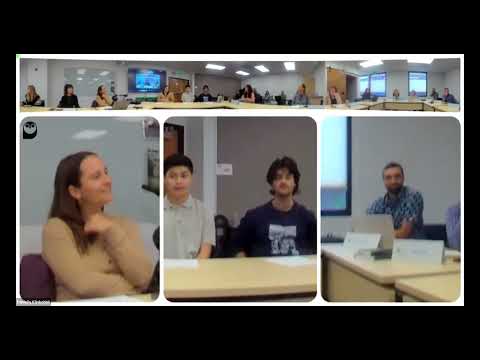
A youth panel at a Eugene Sustainability Commission meeting urged elected and staff leaders to pair local climate action with affordability, transportation safety and stronger engagement with university institutions.
Declan, a fourth-year political science student at the University of Oregon, told commissioners the city has foundational policies but “we've only reduced communitywide emissions by 11%,” and said that, "which means we'll need to reduce communitywide emissions by 39% over the next four years," a shortfall he said requires enforceable measures and regulation of large emitters. He also praised local initiatives such as the home-energy score concept and the city’s Climate Recovery Ordinance as important baselines for deeper action.
"We can't afford not to," Declan said in response to arguments that the upfront costs of climate action are unaffordable; he urged an equity lens that shifts costs away from individuals and toward larger revenue sources and polluters.
Peter, director of the student group Oasis (Oregon Alliance for Sustainable Innovative Spaces), described hands-on student projects — from remediating degraded veteran-wellness sites to studying bamboo architecture abroad — as models for how the university and city could collaborate. "Imagine what we could do if we could apply that same level of leadership and student-led initiatives to the city," he said, calling for clearer municipal channels to bring students into city projects and internships.
Jason, who leads a middle-school green team, described school-level campaigns that convert waste into usable materials and a planned no-idling campaign for parent pickup zones: "We recycle old electronics ... and the sauce packets are turned into material for playgrounds," he said, illustrating that youth are running practical, local climate projects.
Commissioners pressed the panel for concrete engagement ideas, and panelists offered several: an advisory role for student groups, regular city–university briefings, participation credits tied to civic projects, and cross-campus events such as the HOPES student design conference. Peter highlighted existing programs that bring students and community groups together and encouraged the commission to help publicize and channel student capacity toward municipal needs.
The panel also recommended more visible pathways for collaboration — from single project involvement to formal advisory relationships — and suggested the commission invite university representatives to explain campus decarbonization plans in a future meeting. Commissioners signaled interest in following up and in inviting University of Oregon staff or trustees to the commission in the next fiscal year.