Get Full Government Meeting Transcripts, Videos, & Alerts Forever!
Get email alerts on the Rodenticide Regulation topic
No spam. Unsubscribe anytime.
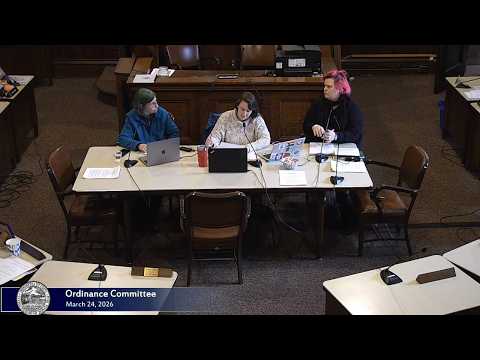
Ordinance committee backs ban on second‑generation anticoagulant rodenticides on city property, urges state action
Summary
The committee voted March 24 to recommend an ordinance banning second‑generation anticoagulant rodenticides ("escars") on city‑owned property and unanimously backed a resolution urging the Massachusetts Legislature to pass companion bills; the committee requested legal drafting and a Board of Health transition plan and set a July 1, 2026 effective date for the municipal ban.
The Holyoke Ordinance Committee on March 24 recommended that the city adopt an ordinance prohibiting second‑generation anticoagulant rodenticides (commonly called "escars") on city‑owned property and also voted to send a resolution to the full council expressing support for Massachusetts legislation (Senate Bill 2721 and House Bill 965) to restrict these products statewide.
Chair Meg McGrath Smith framed the local ordinance as the action the city can take under current state law and said the committee used a draft modeled on another municipality as a template. The proposed local policy would ban escars on city‑owned buildings, grounds, parks, open spaces and rights of way, allow emergency waivers from the board of health under strict conditions, and ask staff to pay attention to contract language for outside vendors.
"Emergency waivers shall be restricted in time and location and shall only be granted after a well‑documented request detailing significant rodent infestation of public health consequence that has already exhausted all viable less‑toxic integrated pest and rodent management practices," McGrath Smith read from the draft ordinance.
Michael Gallagher told the committee escars are currently placed in bait boxes for rodent control inside some city buildings — including fire stations and other facilities — under contract with exterminators. "There are traps that are put out by a company that the city contracts with...in various buildings such as your fire stations, your war memorial building," he said.
Kathy Gainer, president of Urban Wildlife Rehabilitation and a state‑permitted rehabilitator, addressed the committee at length and described necropsy and tissue tests showing bioaccumulation of these anticoagulants in raptors, predatory mammals and aquatic life. "A single meal can kill an animal within a few days," she said, recounting a bobcat kit that died with anti‑coagulant levels consistent with second‑generation products.
After discussion about contract language, board of health responsibilities and a reasonable transition period, the committee voted to ask the solicitor to draft legal language, to set an effective date of July 1, 2026, and to request a written board‑of‑health plan describing how the city will transition away from escar use; the motion passed on a roll‑call vote. The committee also unanimously recommended the resolution supporting SB 2721 and HB 965.
The committee will forward the solicitor’s legal draft and the board of health’s plan with its recommendation to the full city council for final action.