Get Full Government Meeting Transcripts, Videos, & Alerts Forever!
Get email alerts on the Native Planting Zoning topic
No spam. Unsubscribe anytime.
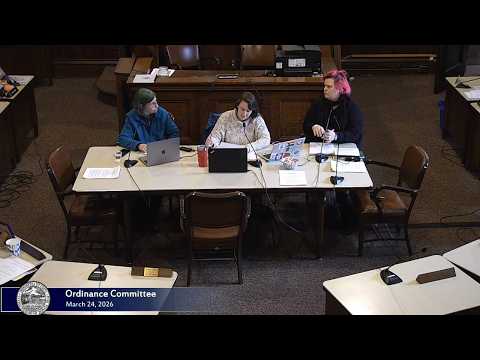
Ordinance committee opens hearing on requiring native plantings, schedules follow‑up with planning board
Summary
The Holyoke Ordinance Committee opened a public hearing March 24 on a proposed zoning amendment to require a percentage of native plantings in new construction and major rehabilitation projects and to align the city with Massachusetts' prohibited‑plant list; the committee continued the hearing to April 28 to receive the planning board's technical recommendations.
The Holyoke Ordinance Committee on March 24 opened a public hearing on an order to amend the city’s zoning code to require a certain percentage of native plantings in new construction and major rehabilitation projects and to adopt the state’s prohibited‑plant list for landscaping.
Chair Meg McGrath Smith said the proposal is intended to support pollinators and reduce invasive species that can spread from commercial landscaping into roadsides, parks and woods. She told the committee that many existing properties would be grandfathered and that the planning board would be asked to provide technical recommendations before the committee acts.
Committee members pressed on scope. "I was considering that this is more about commercial properties, but it's a wider question for what other members of the committee are also considering," McGrath Smith said, noting site‑plan review authority typically applies to larger projects.
Public commenters and community gardeners urged stronger action to protect pollinators. "We encourage minimizing the use of pesticides wherever we can and planting native plants," said Sharon Farmer of the Western Mass Gardener Association, citing successful native plant projects at the senior center and other city sites.
Michael Gallagher, the DBW director, told the committee the Massachusetts Department of Conservation and Recreation maintains preferred‑and‑do‑not‑plant lists that the city can use when drafting ordinance language. The chair said those materials will be distributed to the committee.
Because the planning board is reviewing a related landscaping package, the committee voted to continue the hearing to Tuesday, April 28 at 6:30 p.m. for further consideration of a recommended percentage and technical definitions. The committee did not set a required percentage; McGrath Smith said the specific percent would be developed with planning staff and the board.