Get Full Government Meeting Transcripts, Videos, & Alerts Forever!
Get email alerts on the Cannabis Policy topic
No spam. Unsubscribe anytime.
Wyoming council approves municipal cannabis consulting deal and aligns buffer rules with liquor and tobacco
Summary
The Wyoming City Council approved a municipal retail cannabis consulting agreement that would give the city 40% of net revenues and also voted to remove a 500-foot childcare buffer so cannabis zoning matches liquor and tobacco rules. Both measures passed after discussion about operations, public safety and competing with private businesses.
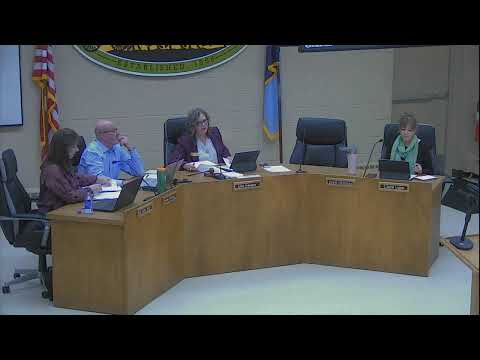
The Wyoming City Council on a voice vote approved a municipal retail cannabis consulting agreement and an amendment to the city's cannabis buffer to match liquor and tobacco rules.
Under the consulting agreement presented by staff, the city would retain licensing authority while an independent contractor would handle daily operations ' including staffing, facility management, product sourcing, security, compliance and financial reporting. Staff said the contract envisions an initial hemp operation that would later transition to a state retail cannabis license. The agreement as described in the meeting calls for the city to receive 40% of net revenues and the contractor 60%.
Mayor Bill Parker, who introduced himself to the council during discussion, emphasized safety and education as benefits of a licensed retail operation: "Dispensaries educate the client. They also educate them on the different kinds of products that are available," he said, adding that licensed operations include testing and security requirements that reduce risks associated with unregulated markets.
Council members pressed staff on operations and fiscal treatment. One council member raised a concern that cities should not compete directly with private business and said they were uncomfortable with the city taking a share of net revenue rather than receiving a portion of gross receipts or a guaranteed minimum payment. Staff responded that revenues would be deposited to the general fund and that the council could later consider earmarking or allocating proceeds to parks, streets or facilities.
Chief Bower described public-safety advantages the council might expect from working with a regulated vendor, citing state-required security measures, surveillance and protocols designed to limit underage sales. "It ends up being a really safe place where it's just education, dispensing medication, making sure we're taking care of the client and limiting underage sales," he said.
Staff told the council the agreement allows city audits at any time and for six years after the term, "per state statute," and that the initial contract term would be five years with a five-year renewal option. The council was told the contractor would not be able to bind the city to contracts or obligations and that insurance, recordkeeping and dispute-resolution procedures are included.
During the discussion, Member Jagger (transcript spelling varies in the record) argued the city should not operate in retail and suggested seeking a second bid for services; others said a consulting model helps the city avoid up-front capital costs and share oversight while capturing revenue. After a motion and second, the consulting agreement was approved; the record shows a vocal "I opposed" during the voice vote but does not attribute that opposition to a named member.
Separately, the council considered and approved an amendment to the zoning code to remove the 500-foot childcare buffer for retail cannabis and area cannabis establishments would instead follow the same buffer rules that govern liquor and tobacco. Staff provided a summary publication resolution for legal notice (resolution numbers stated in the record as 2250432 and 254-32; the transcript contains inconsistent numbering). The planning commission had recommended similar alignment at the earlier work session.
What's next: Staff and legal counsel will finalize the consulting agreement language for signature and the ordinance amendment will be published per the adopted summary resolution. The council did not record a roll-call vote in the meeting transcript provided; both measures were announced as approved after voice votes with one stated dissent during the consulting-agreement vote but without an attributed speaker.