Get Full Government Meeting Transcripts, Videos, & Alerts Forever!
Get email alerts on the Short Term Rentals topic
No spam. Unsubscribe anytime.
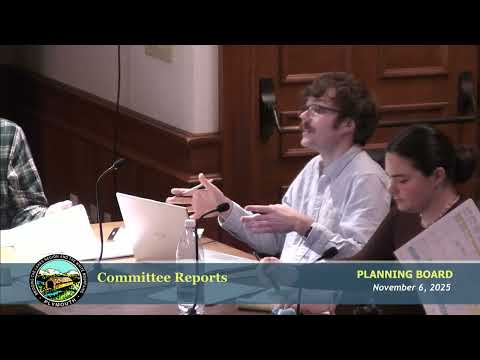
Plymouth planners debate owner-occupancy, safety checks as they draft short-term rental rules
Summary
The Planning Board spent the bulk of its meeting weighing life-safety rules, owner-occupancy requirements and enforcement options for proposed short-term rental regulations, and directed staff to prepare draft language that would create two uses: owner-occupied short-term rentals and non-owner-occupied rentals subject to site-plan review.
The Plymouth Planning Board on Thursday dug into a months-long discussion about short-term rentals, focusing on life-safety standards and how to prevent investor-driven conversions that take housing off the long-term market.
Tom, a town staff member who presented model ordinances from nearby communities, told the board that short-term rentals currently are not permitted in Plymouth but have been occurring with selective enforcement. He recommended a permitting approach that would allow the board to review some uses case-by-case — for example, permitting by special exception or conditional use — and to require annual registration and inspections focused on life safety, septic compliance and parking.
Why this matters: Board members said life safety was their top priority. Members repeatedly cited issues they have observed in surrounding communities, including missing smoke detectors, no working fire extinguishers, inadequate egress and improperly configured septic systems. Those problems motivated support for registration and inspection programs similar to requirements for lodging businesses.
Discussion centered on owner-occupancy limits versus allowing absentee owners. Several members argued that owner-occupancy in residential zones reduces neighborhood disruption and helps ensure someone is on site to address problems; others noted that owner-occupancy can be overly rigid for part-time residents and that well-managed non-owner operations can sometimes function without problems.
Public comment: Brendan McDowell, a High Street resident, said he supported an owner-occupancy requirement, arguing short-term rentals can remove housing stock needed by younger families.
Board direction and next steps: The board converged on a two-track approach staff should draft: (1) a short-term rental definition and use for owner-occupied dwellings treated as an accessory use, and (2) a non-owner-occupied short-term rental classification treated as a commercial change of use that would trigger site-plan review and stricter performance standards. Members asked staff to prioritize simple, enforceable life-safety rules and to return draft language for further review and public hearing scheduling.
Statements and attributions in this article come from speakers recorded in the meeting transcript. Where a speaker was not clearly identified by name in the transcript, the report uses functional descriptions (for example, 'Tom' as the presenting staff member and 'the board').