Get Full Government Meeting Transcripts, Videos, & Alerts Forever!
Get email alerts on the Facilities topic
No spam. Unsubscribe anytime.
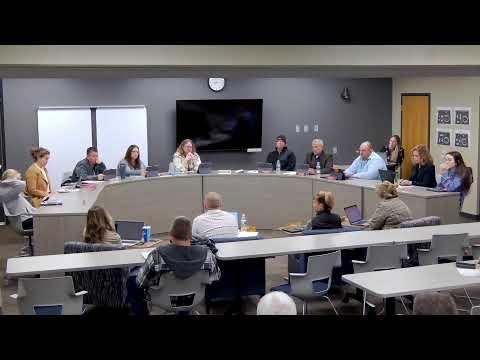
Pulaski officials unveil long‑range facilities roadmap, recommend community survey on $50M–$100M options
Summary
District consultants and administrators presented a long‑range facilities plan that could approach $100 million if fully funded, proposing options from a $50 million package (designed to avoid a mill‑rate increase via debt prepayment) up to larger packages; leaders recommended an April–May community survey to prioritize projects.
Pulaski Community School District officials on Tuesday laid out a long‑range facilities roadmap that includes renovations and large new projects at the middle and high schools — from expanded CTE (career and technical education) and agriculture spaces to a five‑mat wrestling room, a competition pool plus a warm‑water therapy pool, and a 60‑yard indoor turf field.
Clint, a project lead from CD Smith, told the board the total of all proposed items would be "approaching a $100 million" package if every element is included. The district presented three example debt scenarios — roughly $50 million, $70 million and $90 million — and showed modeled tax impacts for those options.
The superintendent said the district can model a $50 million scenario that would not raise the mill rate if the board continues a prepayment strategy on existing debt and phases projects carefully. "We can structure some of the financing and prepayment so the mill rate doesn't increase," the superintendent said during the presentation.
Board members and athletic staff emphasized the operational need for expanded activity spaces. A parent and resident, Ray Faton, told the board he supports the expansion and said upgraded facilities would create community rental opportunities and reduce current safety and space problems in athletics: "We literally have 120 PACE program kids ... we're running out of room," Faton said, urging the board to outline funding so taxpayers can understand impacts.
Consultants described site constraints and cost drivers. They noted the existing pool footprint could be repurposed as a multi‑purpose turf and batting‑cage space for middle‑school PE and clubs, but that enlarging the pool area or changing site layout could require blasting through bedrock in places — a significant cost driver.
Project team members asked the board to consider how items should be grouped on a community survey. Several projects are interdependent (for example, a competition pool paired with a warm‑water therapy pool), and the administration said survey questions will need to make clear which items are standalone and which are coupled so respondents understand tradeoffs.
District finance presenters demonstrated how tax impacts change by scenario and home value, and the board discussed timing. Administration proposed a communitywide survey in April–May, with roughly three weeks to collect and process responses; results would inform whether the district pursues a referendum in the fall.
Next steps include refining project scopes and costs, clarifying which options can stand alone on a ballot, and approving the survey instrument before community distribution. The board indicated interest in community outreach and called for clearer breakdowns of coupled versus standalone projects before finalizing the survey.
The facilities discussion continued through audience Q&A before the board moved on to routine business.