Get Full Government Meeting Transcripts, Videos, & Alerts Forever!
Get email alerts on the Transportation topic
No spam. Unsubscribe anytime.
Officials outline Vision Zero spending, daylighting and speed‑camera plans
Summary
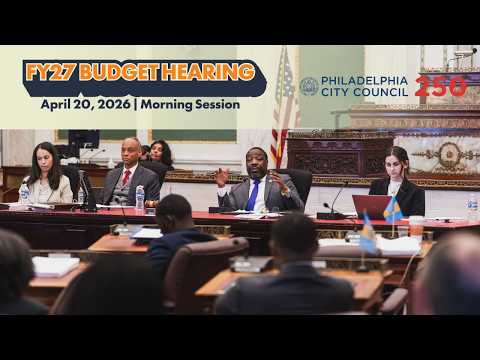
Deputy Managing Director Mike Carroll told council the FY27 budget includes $5 million for Vision Zero projects, described daylighting and protected‑bike lane approaches, and cited Roosevelt Boulevard speed‑camera success as evidence for expanding camera corridors.
Council asked for a brief update on Vision Zero, protected bike lanes and daylighting investments in the FY27 budget.
Mike Carroll, deputy managing director for transportation and infrastructure systems, described a tiered approach to bike‑lane protection—painted buffers, flex posts, vertical elements, or using parking as a barrier—plus the maintenance needs that accompany higher‑protection installations. Carroll said there is roughly $5 million in the mayor’s FY27 Vision Zero capital allocation and that daylighting an intersection often costs on the order of $10,000, depending on the treatment.
On enforcement and speeds, Carroll cited the Roosevelt Boulevard speed‑camera project as an example: an initial reduction of more than 90% in speed violations on that corridor translated into fewer fatal and serious injuries relative to other parts of the city. He noted school speed cameras are activated during school hours only, and the city will publish a list of targeted schools for the program.
Council members pressed for a prioritized list of daylighting and protected‑lane projects, commitment on maintenance funding, and clarification on whether private partners can assist with beautification and upkeep. Carroll said the city welcomes neighborhood partnerships but must ensure maintenance plans and responsibilities are clear before relying on private groups.
MDO agreed to provide the committee with more specific program targets and a breakdown of planned street segments and projected protection levels.