Get Full Government Meeting Transcripts, Videos, & Alerts Forever!
Get email alerts on the School Safety And Inclusion topic
No spam. Unsubscribe anytime.
Parents press District 34 on classroom safety, inclusion and student device use
Summary
Dozens of parents urged the Glenview CCSD 34 Board to act on classroom safety, consistent communications and supports for inclusion; one parent presented a petition from more than 600 families asking for stricter device limits and a bell‑to‑bell phone ban.
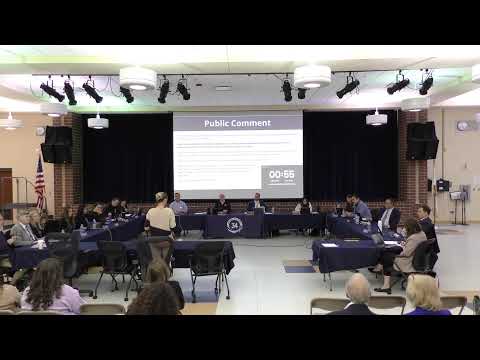
Dozens of parents used two public‑comment periods to press the Glenview CCSD 34 Board of Education for faster action on classroom safety, clearer communications and new policies governing device use in elementary classrooms.
At the first public comment period, multiple parents described repeated classroom evacuations, physical injuries to students and staff, and what they said were inconsistent incident classifications and sparse notifications to families. Nicole Straight, a Henking‑Hoffman parent, said families had reported children bringing home physical injuries and alleged at least one teacher‑injury report had been inaccurately characterized. "Children cannot learn when they don't feel safe," she said.
Other speakers described frequent use of classroom alert buttons, prolonged disruptions across several buildings, and staff strain. John C. Cholousky urged improved behavior data collection, lower class sizes and more support staff after describing lockdown‑style evacuations at multiple schools. Pat Milzer asked the board to create protocols that combine restorative approaches with enforceable consequences to ensure accountability.
Several parents specifically tied safety concerns to supports for students with complex needs. Kathleen Bakhtiari requested a stakeholder task force to standardize communication protocols and a clear staffing plan as the district transitions away from the True North Cooperative. Lorena Isaza, through an interpreter, urged continued resourcing for inclusive classrooms: "Inclusion benefits everyone," she said.
Technology and classroom screen time emerged as a related concern. Aaron Friedman said he represents "more than 600 District 34 parents" who signed a petition asking the district to limit device use: remove iPads for kindergarten through second grade, cap daily device time at about 30 minutes for grades 3–8, ban phones bell‑to‑bell (including lunch), and prioritize pen‑and‑paper for writing. "We are not against technology. We want to eliminate unnecessary screen time," Friedman said.
Board and staff responses at the meeting were largely listening‑mode; administrators and board members thanked commenters and noted follow‑up would be provided. The board did not take immediate action on new discipline or device policies at the meeting, but multiple parents urged concrete next steps such as listening sessions, clearer incident notification procedures, and a public staffing plan linked to the district’s transition from the cooperative.
The second public comment period reinforced those themes. Penelope Hurtado, president of the district Spanish BIPAC, urged sustained commitment to inclusion and training. Anna Sienkowski urged expanded camera coverage to clarify incidents, changes to late‑arrival scheduling, restoration of some ESL resources and more hands‑on instruction for early grades.
What happens next: board members and administrators heard repeated calls for a mix of short‑term fixes (improved notifications and data collection) and longer‑term planning (staffing changes and policy reviews). The board did not vote on new safety or device policies during the meeting; it will appear on future agendas if staff bring formal recommendations.