Get Full Government Meeting Transcripts, Videos, & Alerts Forever!
Get email alerts on the Housing Policy topic
No spam. Unsubscribe anytime.
Consultants tell Battle Creek City officials zoning changes, incentives and ADUs can expand affordable housing supply
Summary
At a City of Battle Creek workshop, consultants urged regulatory updates, modest incentives and wider use of duplexes and accessory dwelling units to meet workforce housing needs, citing rent benchmarks for teachers, EMTs and service workers and an inventory of 1,378 vacant parcels for infill.
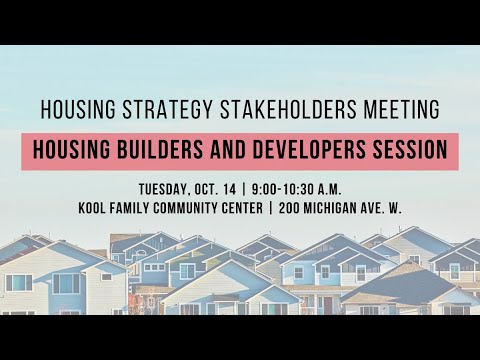
Consultant Ryan Kilpatrick told a City of Battle Creek workshop that modest zoning changes, targeted incentives and strategic use of accessory dwelling units (ADUs) and duplexes could expand housing affordable to local workers and reduce displacement pressure.
Kilpatrick, who led the presentation, framed the session as an interactive exercise asking builders, developers and public officials what housing products they can build that would at least break even in today’s market. "If we don't build new housing for the new folks who are moving in ... they will create displacement pressure," he said, urging the group to consider both affordable and market-rate options.
Why it matters: Kilpatrick and the consulting team said the city’s household mix — 65% one- or two-adult households and only 28% families with children — does not match the predominant housing stock of large single-family homes. They argued this mismatch calls for more “missing‑middle” housing types such as small single-family houses, duplexes, narrow-lot two‑bedroom homes and ADUs.
Market benchmarks and numbers: The consultants used common affordability metrics and local income examples to show where market solutions may work and where subsidy is required. They noted that housing costing 30% or less of gross income is commonly considered affordable. Examples presented included:
- A teacher with about $66,000 in annual pay could afford roughly $1,650 per month in housing. Kilpatrick said that price point is challenging but achievable for some new-build models with zoning support. - First-year EMTs, firefighters and police officers earning near $50,000 a year can typically afford about $1,250 a month; the consultants called $1,250 a useful break‑even target for middle-income workforce housing. - Households earning about $25,000 annually would need rents near $600 a month and therefore require subsidy to be served.
Product ideas and examples: Kilpatrick walked through concrete building types that could help meet those benchmarks. He highlighted duplexes that can rent for about $1,200, 340‑square‑foot cottages for aging residents or first‑time buyers, and single‑family homes with rentable ADUs that provide income to lower a mortgage payment. "If I get that ADU in the back for $800–$900 a month, my actual mortgage payment is under $1,000 a month," he said as an example of how ADUs can change feasibility math.
Regulatory and fiscal levers: The presentation emphasized that many local zoning codes have not been updated for decades and that small regulatory changes — lower minimum lot sizes, allowing gentle density within single‑family neighborhoods, and permitting ADUs — can unlock private development without broadly subsidizing middle‑income housing. Kilpatrick also framed density as a fiscal question: denser development can spread infrastructure costs more broadly and reduce per‑household expense for roads and utilities.
Vacant land and local next steps: The consultants reported an inventory of 1,378 vacant parcels across the city as potential infill sites, noting some parcels in that count may be state‑owned or right‑of‑way and will need follow‑up. Kilpatrick handed the session to Len Wells of AP planning to lead small‑group exercises mapping where specific typologies and incentives might work.
What was not decided: The workshop was an informational and feedback session rather than a decision meeting. No formal motions or votes were taken. Consultants asked participants to identify neighborhood priorities and development opportunities for later planning and possible zoning updates.
Participants and sources: The consulting team listed attendees from Flywheel, Balk (consultant), AP planning (Len Wells) and City of Battle Creek staff in the audience; multiple local builders and a representative from Habitat spoke during the discussion. The presentation used local income and rent figures offered by Kilpatrick and audience members.
Next steps: Consultants will use attendee input from the small‑group exercise to develop draft zoning changes and incentive options for City of Battle Creek staff and planners to consider in subsequent workshops.