Get Full Government Meeting Transcripts, Videos, & Alerts Forever!
Get email alerts on the Appropriations Veterans topic
No spam. Unsubscribe anytime.
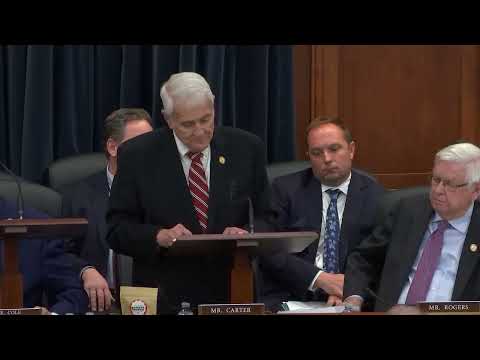
Committee member presents FY2027 Military Construction, Veterans Affairs appropriations bill
Summary
A committee member presented the Fiscal Year 2027 Military Construction, Veterans Affairs, and Related Agencies Appropriations Bill, describing it as bipartisan and outlining $137.5 billion in non-defense discretionary funding, $323 billion in mandatory funding and $19.2 billion for infrastructure investments to support veterans and service members.
A committee member presented the Fiscal Year 2027 Military Construction, Veterans Affairs, and Related Agencies Appropriations Bill to the Appropriations Committee, outlining funding levels and priorities for veterans’ services, military construction and related agencies. The presenter described the measure as bipartisan and urged colleagues to use the amendment process for items on which they disagree.
The presenter said the bill “provides the Department of Veterans Affairs and related agencies with 137.5 billion in non-defense discretionary funding and 323 billion in mandatory funding to fulfill our obligations to our veterans.” He described additional investments totaling about $19.2 billion for infrastructure projects intended to improve housing, work environments and family supports for service members.
The presentation emphasized priorities the bill is intended to address, including homelessness prevention, mental health services and programs for women veterans. The speaker framed the measure as balancing operational readiness with quality-of-life projects so that service members “should not need to worry about childcare and housing.”
The presenter acknowledged colleagues by name in thanking staff and partners who worked on the bill, including Miss DeLauro, Miss Beasley and Debbie Wasserman Schultz, and praised the committee’s leadership for moving the committee toward “acting like appropriators” who use the amendment process to resolve differences. No formal motions or votes were recorded in the provided transcript excerpt.
The committee member closed by asking the committee for support as the bill moves forward in the process.