Get Full Government Meeting Transcripts, Videos, & Alerts Forever!
Get email alerts on the Behavioral Health topic
No spam. Unsubscribe anytime.
County moves ahead on crisis‑stabilization centers; committee reviews $3.1M operating request
Summary
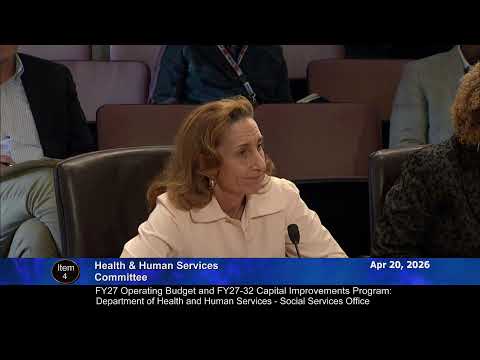
DHHS laid out plans for diversion and crisis‑stabilization centers (Rockville site under renovation) and requested a FY27 operating enhancement of $3,104,903 and 18 FTEs to staff clinical and nursing roles required by state licensure; DHHS said Medicaid billing should offset part of the cost in future years.
The Health and Human Services Committee examined Montgomery County’s plan to expand crisis‑stabilization services and to open a county diversion center, and DHHS requested an operating enhancement to staff the centers in FY27.
Chief Monica Martin described a crisis continuum that aims for a ‘‘no‑wrong‑door’’ response: mobile crisis teams, crisis centers with walk‑in access and short‑term stabilization beds to avoid emergency department boarding and reduce criminal justice involvement for people experiencing behavioral health crises.
DHHS said Rockville renovation work is underway and that the proposed FY27 operating enhancement totals $3,104,903 plus 18 FTEs. The department outlined regulatory staffing and licensing requirements (including at least one registered nurse on site at all times and qualified prescribers), and projected partial Medicaid reimbursement beginning in FY28 that could reduce net county costs in later years.
Chief Martin cited substance‑use outcomes and prevention work tied to opioid‑abatement funds: the county distributed about 9,300 naloxone kits in 2025 and reported reductions in opioid‑related ER visits and overdose deaths compared with 2024. The committee also reviewed proposed investments in school‑based prevention funded by opiate‑abatement dollars.
Councilmembers raised questions about long‑term operating cost assumptions, staffing plans and how the centers will coordinate with police and hospitals. DHHS described ongoing co‑response pilots with the police department and said protocols and debrief processes are in place to improve coordination and trigger mental‑health backup when needed.
What’s next: The crisis‑stabilization operating enhancement was placed on the reconciliation list for full council review; DHHS will provide further detail on staffing costs, billing assumptions and implementation timelines ahead of reconciliation.