Get Full Government Meeting Transcripts, Videos, & Alerts Forever!
Get email alerts on the Accessibility topic
No spam. Unsubscribe anytime.
Hope Mills public works outlines ADA transition plan, sidewalk survey and timeline
Summary
Deputy director Bruce Clark updated the board on the town's ADA transition plan: inventory and self‑evaluation completed, consultant work by Steuart Engineering, a six‑month trip‑hazard sidewalk survey planned, and funding tied to the CIP for repairs; staff emphasized the plan is a living document with documented progress required by the Department of Justice.
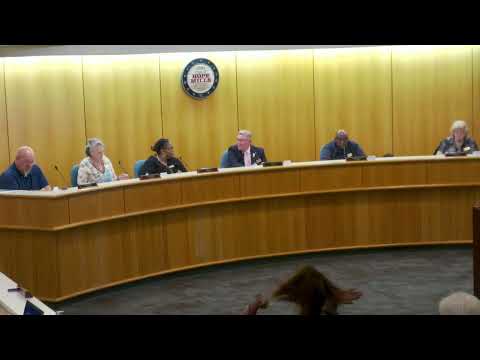
Bruce Clark, deputy director of public works and an ADA transition coordinator, briefed the Hope Mills Board of Commissioners on April 20 about the town’s ADA transition plan and next steps.
Clark reviewed the plan’s development: a self‑evaluation of facilities completed using the 2010 ADA design guidance, public outreach with veterans and disability‑advocacy groups, and consultant support from Steuart Engineering. He said the transition plan is intended to be a living infrastructure management tool tied to the town’s CIP and capital budgeting rather than a static compliance document, stressing that “a plan sitting on the shelf is not compliancy.”
Clark said the town is responsible for nearly seven miles of sidewalks, many on state (DOT) roads, and that a detailed trip‑hazard and slope survey for sidewalks—measuring hazards (anything over a quarter inch considered a trip hazard) and accessibility compliance—will take about six months. Funding for repairs based on that survey has been proposed in the next fiscal year’s budget, he said. Clark explained DOT is responsible for ramps within state right‑of‑way, while the town is responsible for sidewalk maintenance and associated ADA improvements on town‑maintained facilities.
Commissioners thanked staff for work to date and asked questions about tactile detectable surfaces (truncated domes) and materials; staff confirmed contractors installed detectable mats and described recent ramp and ramp‑replacement work in neighborhoods and at veterans’ park. Clark reiterated that ADA compliance requires documented progress and prioritized remediation tied to available CIP funding.
What happens next: staff will complete the six‑month sidewalk condition survey, publish transition‑plan updates on the town website, and include repair projects in upcoming budgets so work can proceed once funds are available.