Get Full Government Meeting Transcripts, Videos, & Alerts Forever!
Get email alerts on the Criminal Justice topic
No spam. Unsubscribe anytime.
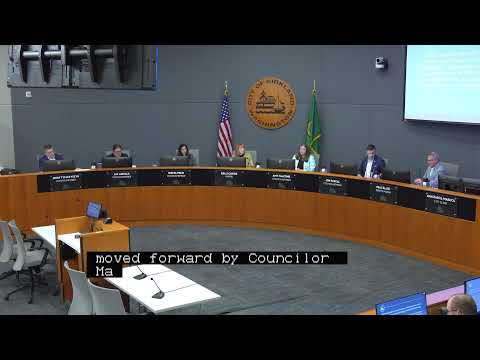
Kirkland prosecutors outline charging timelines, pretrial calendars and community court at council study session
Summary
At a study session the city’s contracted prosecutors from Moberly & Roberts reviewed how cases are charged, how pre‑trial and motion calendars work, and how community court and SOC agreements are used to resolve cases without trial; staff said they aim for 30‑day turnaround on serious cases and described the challenges of domestic‑violence prosecutions.
Kirkland’s contracted prosecutors briefed the City Council on April 21 on how municipal cases move through the system, the city’s use of stipulated orders of continuance (SOCs) and community court, and the practical constraints that affect case timing.
Prosecutors from Moberly & Roberts told council they receive cases three ways: jail bookings (reviewed the next day), direct‑file citations (out‑of‑custody arraignments), and investigative referrals where officers submit full reports. At arraignment, prosecutors said they typically propose conditions of release including bail, no‑contact orders and sometimes plea offers that resolve cases quickly.
“We try to turn around domestic violence and DUI cases in about 30 days,” prosecutor Lynn Moberly said, adding that the office prioritizes DV and DUI for speedy charging. Blakeley (a managing attorney in the office) described common motion types (CRLJ 3.5 and 3.6 evidentiary motions and Napstead motions to dismiss) and explained the briefing schedules and officer preparation required for contested hearings.
Prosecutors explained community court and SOCs (stipulated orders of continuance) as a therapeutic option: SOCs are contracts between the city and defendants that typically include conditions (substance‑use, mental‑health treatment, employment or housing support) and a dismissal if the defendant completes the program. Community court, launched in March 2021, runs a shorter SOC cycle (about 16 weeks) with weekly check‑ins and case management. Staff reported 82 graduates of community court as of April 8.
Council members pressed on turnaround times, the county and court speedy‑trial rules (90 days for out‑of‑custody cases, 60 days for those in custody), and officer availability for evidentiary hearings; police and prosecution staff said they coordinate schedules to preserve street coverage while ensuring officers can testify when needed.
On case volume and outcomes, staff provided historic data: 1,480 criminal cases filed in 2025 with eight jury trials, and 1,256 filings and 10 jury trials in 2024; prosecutors estimated 90–95% of cases resolve before jury trial, with about 25% resolved through SOCs in the office’s experience.
Council requested more granular performance data on disposition types and resolution rates; prosecutors said they will work with the court to pull that information because court records sometimes list only final disposition types and not the procedural path (SOC vs. plea vs. dismissal).