Get Full Government Meeting Transcripts, Videos, & Alerts Forever!
Get email alerts on the Homelessness Housing topic
No spam. Unsubscribe anytime.
Davis County officials brief South Weber council on supportive and transitional housing models
Summary
Davis County housing officials described permanent supportive and transitional housing as evidence‑based alternatives to seasonal shelters, citing a 93% local success rate in exiting homelessness and asking cities to be prepared if suitable sites and partners emerge. County staff emphasized no project is currently planned for South Weber.
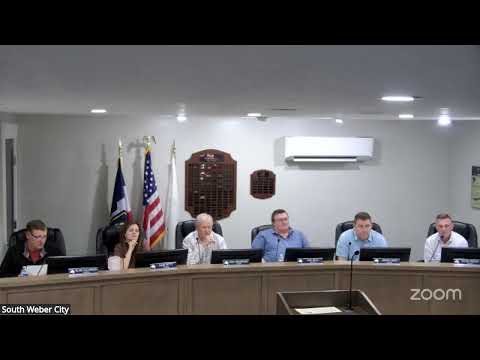
Davis County housing staff told the South Weber City Council on April 14 that permanent supportive housing — units with indefinite tenancies plus on‑site case management and health services — and transitional housing — time‑limited programs with on‑site supports — are more effective at moving people out of homelessness than seasonal emergency shelters.
Ryan Stein, Davis County community services manager, said the county convened a winter‑overflow task force after a state law required emergency winter shelter planning for second‑class counties. He said county leaders sought statutory flexibility to pursue longer‑term approaches because operating a six‑month emergency shelter proved logistically and financially difficult.
Ryan Parker, the county’s housing and homelessness coordinator, told the council the county is briefing all 15 cities in Davis County so municipalities would be aware if a suitable site and financing emerged. Parker said such projects are voluntary for cities and that the county was not proposing a specific project in South Weber at this time. “We’re not here suggesting that we’re going to bring a project to South Weber,” he said.
Parker outlined the models: permanent supportive housing provides a right of tenancy and on‑site services, while transitional housing typically offers six to 24 months of programmatic supports and may impose program requirements. He said case management, job training and on‑site health services — including medication management — are central to the supportive‑housing model.
To quantify outcomes, county staff cited data collected in the Utah Homeless Management Information System (HMIS). Parker said providers’ four‑year results in Utah show a roughly 93% success rate for projects tracking exits from homelessness to stable housing, though he noted annual point‑in‑time counts vary; Davis County recorded 127 people experiencing homelessness in the most recent publicly available count referenced during the presentation.
Parker listed local partners the county has engaged, including Davis Behavioral Health, Open Doors, the Davis Community Housing Authority, Utah State University, Davis Technical College and Intermountain Health, and said an appropriately sized Davis County project could be on the order of 50–60 units. He highlighted potential economic and public‑safety benefits of housing high utilizers of emergency services.
During Q&A, councilors pressed whether projects would be mandatory or funded by state/federal programs; county staff reiterated this session was educational and that any specific proposal would be brought to the city for consideration. The presentation followed a public comment from Michael Grant, who asked whether a county project would be mandatory and raised concerns about the city’s limited tax base and code‑enforcement capacity if such housing were sited locally.
The county officials concluded by asking council members to consider the information if an opportunity and site arise and to coordinate with the county on partners and financing.