Get Full Government Meeting Transcripts, Videos, & Alerts Forever!
Get email alerts on the Referendum Planning topic
No spam. Unsubscribe anytime.
Dr. Banero outlines referendum planning, timeline and ethics for Wen Township schools
Summary
At a regular board meeting, presenter Dr. Banero walked the Wen Township Board of Education through roles, timeline steps and communications rules for a possible facilities referendum, stressing factual messaging and advising the board to avoid using student records or student advocacy in campaign-style materials.
Dr. Banero, identified at the meeting as the field-service presenter, told the Wen Township Board of Education that planning a facilities referendum requires clear roles, a backward-looking timeline tied to an election date and consistent, factual communications with the community. "Communication is the ongoing theme throughout all of this," the presenter said, urging the board to keep staff, architects, demographers and bond counsel coordinated and to involve the public early.
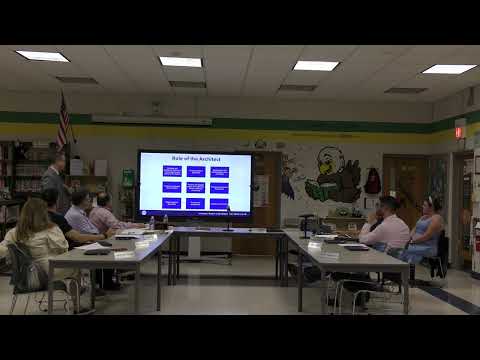
The presentation broke the effort into responsibilities: the board sets project scope and the referendum question, administration develops the educational program and coordinates staff input, the architect prepares plans and bid documents, the demographer provides enrollment projections and bond counsel advises on legal and tax impacts. The presenter emphasized building a written referendum plan that outlines objectives, outreach strategies and an evaluation step to review what worked after the vote.
On process milestones, the board was told that the district has submitted its amended long-range facility plan to the New Jersey Department of Education and is preparing referendum applications. In response to a public question, Mr. Murray explained the anticipated schedule: the district is aiming to submit applications in May, the state may take up to 50 days to review eligibility and cost, a PE (approval) letter could arrive by July with a bond-authorizing resolution possible by mid‑August, followed by additional presentations in September and October and an election currently scheduled for Nov. 1.
Board members pressed on outreach and legal limits. The presenter advised districts to emphasize neutral, factual information when public funds are used: literature paid for with taxpayer money must be informational and not a direct advocacy message telling people how to vote. The meeting also addressed the use of student work and student images: district members agreed that using non-identifiable student artwork in materials is typically acceptable, but videotaping students or having identifiable students urge voters risks running afoul of student-records or ethics rules and should be cleared with the board attorney.
The presenter recommended a suite of outreach tools — mailed informational pieces, newsletters, social media, school events, tours and candidate-style town-halls that focus on needs and outcomes — and suggested developing key communicators, FAQs and consistent talking points. He offered to follow up with examples of district best practices and to return for a short orientation at the May 20 meeting to assist with board self-evaluation and planning.
The board did not adopt any referendum resolutions at the meeting; the presentation was described as informational and the administration indicated follow-up steps to finalize applications and schedule public presentations ahead of the fall election.