Get Full Government Meeting Transcripts, Videos, & Alerts Forever!
Get email alerts on the Energy Storage topic
No spam. Unsubscribe anytime.
Residents and experts urge stricter review, safety checks and transparency for Apache Hill battery project; court approves amended law‑firm engagement letter
Summary
At a Hood County special meeting April 21, residents and technical witnesses pressed commissioners for stronger oversight, third‑party testing and clearer public notice for Apache Hill (battery energy) and Project Patriot proposals. The court separately approved an amended engagement letter with the county's outside law firm; vote details were not specified.
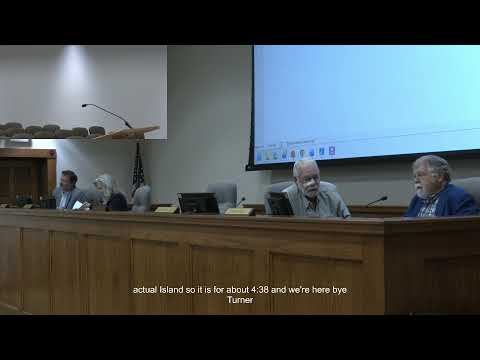
Hood County residents, fire‑safety experts and elected officials used a special Commissioners Court meeting April 21 to press for stricter review, more independent testing and better public notice for proposed battery energy and data‑center projects, and to question how county staff communicated with precinct commissioners about large proposals.
Several speakers told the court they feared the scale and speed of "hyperscale" energy and data projects could outpace local capacity for emergency response and regulatory oversight. "This is about restoring process," one resident told the court, urging commissioners to act to avoid legal and financial exposure and to ensure equal application of county rules. Another local resident who said she lives in Pecan Plantation described concerns about evacuation procedures, reliable water sources for firefighting, and the long burn durations and reignition risks associated with lithium‑ion battery fires.
The meeting included a technical presentation on battery energy storage safety, supply‑chain and cybersecurity issues. The presenter summarized NFPA 855 requirements, noted the 2026 NFPA changes shifting toward performance‑based hazard analysis, and recommended third‑party hazard analyses, independent verification of UL test results, and coordination with state cybersecurity and emergency authorities. The presenter also noted that some inverter and component suppliers are linked to complex international supply chains and recommended verification that attestations in permit packets cover the full chain of components, not only the inverter brand named in procurement documents.
Why it matters: Commissioners faced repeated requests to require demonstrable, site‑specific safety proof before facilities operate in proximity to schools, daycare centers and dense residential neighborhoods. Speakers asked the court to require (a) proof of NFPA 855 and UL‑lab testing for installed containers and inverters, (b) detailed emergency‑action plans and a funded fire‑response commitment, and (c) routine third‑party inspections and documentation that can be reviewed by affected precinct commissioners.
What commissioners did: The court heard extended public comment and expert testimony and discussed whether the proposed local policy change — adding a mandatory disclaimer to communications from the development director stating that those communications "shall not be construed to confer contractual and/or vested rights prior to presentation to Hood County Commissioners Court for approval" — would help protect the county and improve transparency. Several public speakers asked that affected precinct commissioners receive courtesy copies of developer communications.
Votes at a glance - Motion: Authorize the county judge to sign an amended engagement letter with the outside law firm (as described in the meeting packet). Mover: Commissioner Samuelson. Second: Mr Andrews. Outcome: Approved. Vote tally: not specified in the record.
Speakers and evidence Speakers who appear in the transcript include Commissioner Samuelson (mover of the engagement‑letter motion), Mr Andrews (second), John hi Smith (public commenter), Jennifer Carey (public commenter), Kenneth Better (public commenter), Amanda Wolford (resident/witness), Mr Mills and Mr Young (county staff/technical contributors), and a technical presenter identified in the record as Presenter. Substantive claims, requests for documents and technical recommendations were made on the record and were included in meeting materials provided to the court.
What remains unresolved Residents and witnesses asked the court to (1) require demonstrable evidence of NFPA/UL compliance and third‑party hazard analyses before sites operate; (2) require proof that emergency‑action plans are funded and that response times are achievable (hydrant distance, volunteer department capacity); and (3) adopt procedures ensuring affected precinct commissioners receive timely notice of developer communications. Commissioners did not adopt a final new rule during this meeting; several public speakers asked the court to schedule a follow‑up workshop to draft specific permit‑approval thresholds and dated amendment language.
Key quote "If you guys will not act then today's inaction will be included as part of the record — this is about restoring process," a resident told the court, urging immediate steps to constrain unilateral decisions by staff.
What's next Commissioners indicated further review is needed; public speakers recommended a workshop and additional evidence (engineered drawings, UL reports, independent hazard analyses, and verification of alarm/suppression system testing) be provided before the court considers any final approvals. The court recorded and approved the engagement‑letter amendment but did not adopt new development rules at the meeting.
(Reporting based only on the court transcript and materials presented at the April 21, 2026 special meeting.)