Get Full Government Meeting Transcripts, Videos, & Alerts Forever!
Get email alerts on the Taxation topic
No spam. Unsubscribe anytime.
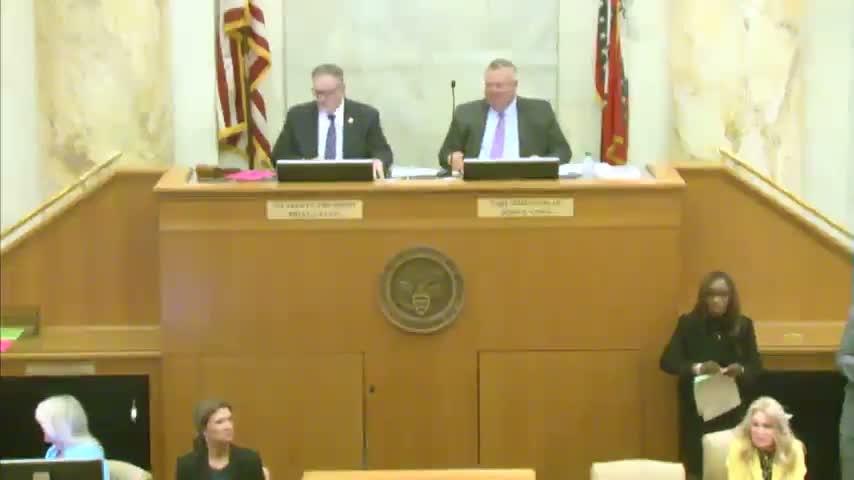
Arkansas House passes income tax cut, lowering top individual rate to 3.7% after floor debate
Summary
The Arkansas House approved House Bill 1,001 to cut top personal and corporate income tax rates following floor debate that split lawmakers 79-17, with opponents arguing the revenue would be better used for maternal health, food assistance and rural hospitals.
The Arkansas House passed House Bill 1,001 on a roll call vote, 79 ayes to 17 nays, approving a reduction in the top personal income tax rate to 3.7% and the corporate rate to 4.1%. Representative Eves, sponsor of the measure, framed the bill as broad-based relief for working Arkansans and a continuation of decade-long tax reductions.
Representative Eves told colleagues the measure ‘‘lowers the top personal income tax rate down to 3.7, and the corporate rate down to 4.1,’’ and said the cumulative tax reforms implemented over the past decade have left roughly $1,000,000,000 a year in taxpayers’ pockets and will affect about 1,100,000 Arkansans. He argued the cuts put more take-home pay into the hands of workers and make the state more competitive for jobs.
Opponents, led by Representative Hudson, urged members to consider alternative uses for the revenue. Hudson said the incremental cut ‘‘for many Arkansans, this tax cut will amount to about $50 a year’’ and argued the same funds could address state needs, citing specific spending priorities: extending postpartum Medicaid coverage (which she put at roughly $2,000,000 a year), covering SNAP administration changes (she said $18,000,000 rising to $24,000,000 next year, and potentially $54,000,000 later), early childhood wait-list relief (she cited $22,000,000), and emergency support for rural hospitals and maternity care (she said $25,000,000). "We could have invested in mothers. We chose not to," Hudson said, adding, "I choose not to vote for this bill, and I respectfully ask for you to join me."
Representative Ray, speaking for the bill, called the cuts ‘‘the latest measured and responsible step in a long list of measured and responsible income tax reductions,’’ telling colleagues that the fiscal note shows benefits reach more than 1,100,000 taxpayers and that lowering rates rewards work and helps attract businesses.
After debate, the clerk called the roll for passage. The transcript records the tally as "79, 17, and 0," which the chair announced as the passage of the bill. The House then moved to procedural business and adjourned until 9:30 a.m. the following day to take up a revenue-related Senate bill.
The debate highlighted a core divide: supporters emphasized competitiveness and cumulative tax relief, while opponents said the marginal savings for many households are small and the revenue could be used for targeted investments in health, childcare and rural healthcare. The bill’s sponsors and critics offered competing numerical estimates and policy preferences on the floor; lawmakers voted along those lines to approve the measure.