Get Full Government Meeting Transcripts, Videos, & Alerts Forever!
Get email alerts on the Land Use Solar topic
No spam. Unsubscribe anytime.
Goshen ZBA denies 100-foot internal setback for proposed 10 MW solar array, approves two fence variances
Summary
The Goshen Zoning Board of Appeals denied a request to waive a 100-foot internal lot-line setback for a proposed 10-megawatt solar array, finding the detriment to the community outweighed the benefit, and approved two other setback variances by a 4–1 vote.
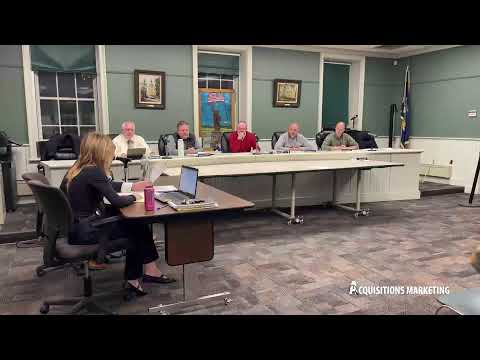
The Goshen Zoning Board of Appeals on May 5 denied a requested 100-foot internal lot-line variance for a proposed 10-megawatt solar array and approved two related fence-setback variances.
Board members focused their deliberations on five statutory factors, with repeated questioning about feasible alternatives and the technical basis for a 1.29 DC/AC conversion rate the applicant cited as necessary for the project’s configuration. "I did not see anything that explained to me why that is what specifically was required to make the project feasible," one member said during the technical discussion.
Why it matters: The denied variance would have reduced the town's internal lot-line setback to accommodate a layout the applicant says is required to meet grant eligibility and project economics. Members agreed the board must weigh realized benefits against community detriment under Town Law §267-b; several said financial eligibility for an outside grant is speculative and does not by itself justify broad local relief.
During deliberations Member Burpstone said of the internal setback request that "the detriment outweighs the benefit," and said he would vote to deny that specific variance while approving the two fence-related variances. Member Healey framed the issue around Town Law §267-b and the grant process, stating: "The applicant has the right to build a 10 megawatt solar array. Right now, no variance is needed." Healey added that the financial benefit from the state's grant program is not guaranteed and therefore should not be treated as a realized benefit in the balancing test.
The board reviewed whether the need for relief was "self-created," noting the applicant’s subdivision and lot-line configuration as a factor. The applicant acknowledged the variances were strategically limited to the internal setback line, but board members said that admission did not negate the self-created nature of the request.
On environmental impacts, the planning board had issued a negative declaration and the applicant asserted compliance with environmental regulations; public commentators raised health and environmental concerns but did not submit contrary expert evidence. As the board noted, the ZBA’s role in this proceeding is limited to evaluating the requested variances, not conducting a comprehensive environmental review beyond the record before it.
Votes at a glance: The board found, by a 5–0 vote, that the detriment to the community outweighed the benefit and denied the 100-foot internal lot-line variance. The two remaining area variances (both fence-setback requests) were approved by a 4–1 vote (Member Healey voted no).
What’s next: Chair Burnham said he will prepare and circulate a written decision reflecting the board’s findings, with a draft decision expected at a future meeting for finalization.