Get Full Government Meeting Transcripts, Videos, & Alerts Forever!
Get email alerts on the Election Integrity topic
No spam. Unsubscribe anytime.
Delegates reject First Amendment carve-out for election-misinformation law; debate centers on deep fakes and time/place voting info
Summary
The House debated and rejected an amendment that would have protected campaign speech, satire and criticism from a bill targeting election misinformation, disinformation, and criminal ‘deep fakes.’ Sponsors warned the change could block enforcement against false time/place voting information; opponents cited pending court precedent and free‑speech risks.
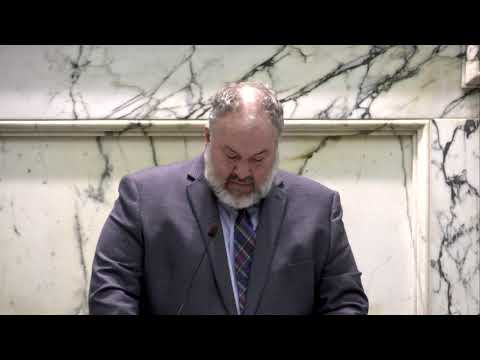
The House of Delegates on March 23 debated an amendment to legislation aimed at restricting election misinformation, disinformation and criminal deep fakes, but members voted down the change that the amendment’s sponsor said was necessary to protect core political speech.
The amendment, offered by the delegate from Harford County, would have inserted explicit language saying the bill “may not be construed to restrict protected political speech, campaign communications, opinions, satire, parody or criticism of candidates or officials.” The sponsor said the insertion was modeled on recent court decisions and was intended to ensure the measure would survive strict‑scrutiny judicial review.
"If we don't include this disclaimer, this law will not stand up to strict scrutiny," the delegate from Harford County told colleagues, arguing the amendment would clarify who is and is not subject to the law and would exempt satire and genuine campaign criticism.
Floor leaders and bill sponsors urged rejection. The floor leader said the bill’s first half is civil and focused on time, place and manner information about voting — "time, place, location of where and when you vote" — and the second half criminalizes the use of doctored audio or video to coerce voters. He argued the amendment would effectively nullify the enforcement tools by permitting nearly any statement to be defended as campaign speech.
"This would essentially strike the entire bill as useless because anybody could then claim that they were simply using campaign speech," the floor leader said.
Members pressed for legal standards. Lawmakers asked whether the bill required actual malice (the New York Times v. Sullivan standard) and whether recent California litigation altered the analysis; the amendment’s sponsor cited a California ruling she said had struck down a similar law for lack of narrowly tailored exemptions and urged the House to add clarifying language. The floor leader responded that the Maryland attorney general’s office had advised differences between the Maryland draft and California statutes and had concluded the Maryland bill would withstand constitutional review.
In a recorded vote the amendment failed, with 90 votes against the change. The bill otherwise advanced toward third reading.
Why it matters: Delegates split over how to balance quick remedies against demonstrable misinformation that can misdirect voters (wrong date, wrong polling place) and constitutional speech protections. The outcome keeps the state’s draft enforcement tools intact for now while leaving open the prospect of court challenges after enactment.
What’s next: The measure was printed for third reading. If the bill becomes law it is likely to face constitutional challenge that would test the balance between prohibiting false election logistics and protecting political expression.