Get Full Government Meeting Transcripts, Videos, & Alerts Forever!
Get email alerts on the Hhs Budget topic
No spam. Unsubscribe anytime.
Senate Finance hearing highlights HHS budget fight over rural investments and Medicaid changes
Summary
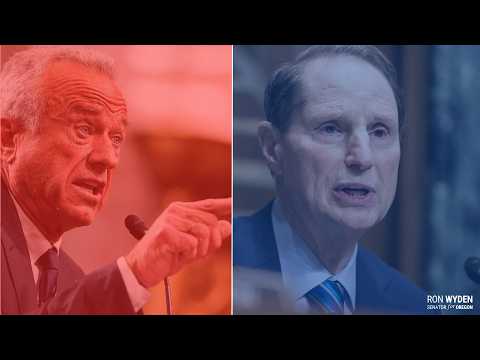
At a Senate Committee on Finance hearing on the administration's FY2027 HHS budget, Secretary Robert Kennedy defended a $50 billion rural health initiative and its other priorities while Democrats warned Medicaid financing changes have already driven closures and job losses in rural hospitals.
Chairman Grao convened the Senate Committee on Finance to examine President Trump's proposed FY2027 budget for the Department of Health and Human Services, focusing on rural hospitals, Medicaid financing and agency priorities. "Beginning this year, all 50 states are receiving funds from the [Rural Health Transformation] program," Secretary Robert Kennedy told the panel, describing investments for workforce, telehealth and infrastructure.
Ranking Member Widen opened with a sharp critique, saying the committee's Democratic members had documented more than 170 rural hospital closures and about 7,500 job losses they attributed to Republican Medicaid changes. "We have the receipts," Widen said and asked that his staff's analysis be entered into the hearing record; the committee granted the request.
Senators pressed Kennedy for specifics about how rural funds will be used. Kennedy said states proposed a wide range of projects, including expanding residency programs, recruiting and retaining health workers, repairing infrastructure and deploying telehealth and diagnostic AI. "A lot of the money is being spent on telehealth," he said, adding that funds will help remote states such as Alaska and Wyoming.
Several senators from rural states pressed for more detail on immediate impacts. One senator said a rural hospital in their state would convert to a rural emergency hospital and lay off 71 workers because of financial constraints linked to Medicaid provider-tax changes. Kennedy responded by pointing to the administration's overall boost to rural federal dollars — a 50% rise in traditional Medicaid flows to rural hospitals through the program — and reiterated that, as he put it, the Congressional Budget Office projects an increase in Medicaid spending over 10 years.
On implementation, senators asked how HHS will ensure that state plans prioritize workforce and that rural hospitals remain solvent during the transition. Kennedy offered meetings and staff-level coordination and pledged to work with senators on state-specific preprints and approvals affecting provider taxes.
The hearing ended with the committee asking for follow-up questions for the record and Secretary Kennedy offering to provide additional documentation and meetings with staff.