Get Full Government Meeting Transcripts, Videos, & Alerts Forever!
Get email alerts on the State Report Card topic
No spam. Unsubscribe anytime.
Hamilton Central officials highlight strong state report card results, note gaps in subgroup performance
Summary
At the April 21 meeting the district presented the New York State report card showing Hamilton outperformed state targets on most measures but lagged slightly on growth and on assessment participation (≈88–89% vs. 95% goal); administrators outlined MTSS and targeted interventions for subgroups.
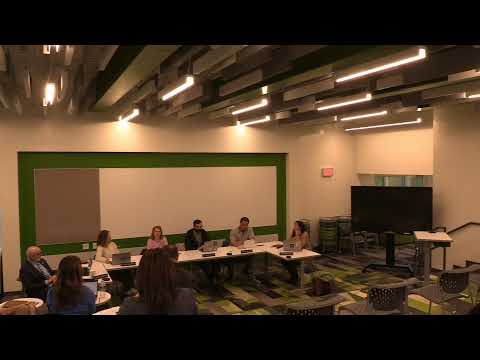
Mr. Rogers presented the Hamilton Central School District’s New York State report card at the April 21 board meeting and told trustees that, by most measures, the district exceeded state performance expectations while identifying two areas for improvement: student-growth measures and assessment participation.
The district’s performance index — measured on a 250-point scale under the state’s revised formula — showed Hamilton exceeding state targets in academic performance and postsecondary-readiness indicators, Mr. Rogers said. He noted the district’s graduation rate (reported around 97.7%) compares favorably with the state average cited in the presentation.
However, Mr. Rogers said the district’s growth score (46.4) is slightly below the state average (50), a gap he attributed to the district’s already-strong baseline performance: “We don’t have as far to grow,” he said. Administrators also flagged assessment participation as a concern — the state’s participation target is 95%, and the district’s participation was reported in the high 80s (about 88–89%). Mr. Rogers and Miss Thomas indicated targeted outreach and messaging to families to raise participation rates and provide a truer measure of student performance.
Mr. Rogers explained the district’s MTSS (Multi-Tiered System of Supports) framework used to identify and support students who are struggling. He said the district has held roughly 130 MTSS meetings this year to coordinate interventions with families, teachers and specialist staff and described follow-up cycles every four to six weeks to evaluate progress and escalate supports when needed.
Board members asked for disaggregated subgroup data by grade level; Mr. Rogers responded he could provide cohort- or grade-level breakdowns at a subsequent meeting. He emphasized that, given the district’s small enrollment, single students can move percentage measures noticeably and that the administration intends targeted interventions for economically disadvantaged students and students with disabilities.
The presentation concluded with broader district context: the district offers eight AP courses with 139 enrollments (students can take multiple AP classes) and continues to monitor participation and subgroup performance as part of its improvement planning.