Get Full Government Meeting Transcripts, Videos, & Alerts Forever!
Get email alerts on the School Budget topic
No spam. Unsubscribe anytime.
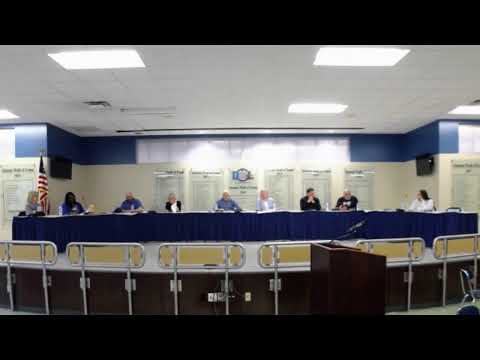
Depew Union Free School District board adopts $58,051,273 2026–27 budget with 2.17% levy increase; bus and capital‑reserve propositions set for ballot
Summary
On April 21 the Depew Union Free School District Board adopted a $58,051,273 2026–27 budget that includes a 2.17% proposed tax‑levy increase. The board also approved placing two vehicle‑purchase and a capital reserve proposition on the May ballot and set dates for the budget hearing and vote.
On April 21 the Depew Union Free School District Board of Education voted to adopt the district’s proposed $58,051,273 budget for the 2026–27 school year, including a maximum proposed tax‑levy increase of 2.17% that represents a $463,744 levy change included in the spending plan.
"Our goals remain the same. We want to build a fiscally responsible plan balancing expenditures and revenue so that we can design the best learning experiences for our students," presenter Nicola Marcus told the board during a lengthy budget presentation that preceded the vote.
The board’s motion to adopt the budget was made on the superintendent’s recommendation and carried on a voice vote; the transcript records the outcome as “motion carried” and does not provide a roll‑call tally. The adoption moves the proposals to the public process: the budget hearing is scheduled for May 12 at 6:30 p.m., and the budget vote and school board election will be held May 19 from noon to 8 p.m. in the high‑school gym.
Budget details and homeowner examples The presentation explained the district’s three‑part budget (administration, program and capital) and noted only modest changes since the March draft. Major cost drivers cited included Teachers’ Retirement System rates, utilities and new debt service associated with recent capital borrowing; the district expects building aid to offset much of the added debt service. State aid remains roughly half of the district’s general‑fund revenue, the presentation noted.
Officials provided estimated homeowner impacts as examples: under the district’s equalization assumptions, the presenter showed an estimated annual increase of about $30.82 for a $100,000 assessed home in Cheektowaga and $36.12 for a $100,000 assessed home in Lancaster, emphasizing these are estimates and that tax rates will be set in August.
Ballot propositions The board also authorized three propositions to appear alongside the budget on the May ballot: - Proposition 1: Approval of the $58,051,273 budget (tax‑levy increase 2.17%). The presentation reviewed the contingency budget process and listed cuts that would be required if the budget fails, including elimination of some non‑union salary increases, reduced training and equipment, and removal of the $100,000 capital outlay project that earns state aid. - Proposition 2: Use of the vehicle‑purchase reserve to buy buses. The district proposes drawing just over $1 million from the reserve to purchase four 66‑passenger diesel buses with Wi‑Fi, two 30‑passenger diesel buses and one lift‑equipped bus to ensure accessibility. State bus aid is rebated over a five‑year period, the presentation said. - Proposition 3: Establishment of a capital reserve fund up to $15 million plus interest over 15 years to fund future capital improvements and continue projects begun in the 2021 capital program.
Next steps and advocacy priorities The presenter said the district will continue advocacy at the state level on foundation aid, special‑education funding, the zero‑emission school bus transition timeline and expansion of universal pre‑K, and noted the district’s opposition to a proposed school voucher program. The board set the required property‑tax report filing and other procedural milestones ahead of the May vote.
What the record shows The transcript records the motions and that each motion carried. It does not include individual roll‑call vote tallies for these actions. Where figures and place names in the transcript were garbled, the article reports corrected, standard numeric formatting for clarity (for example, the budget number is reported here as $58,051,273 consistent with the presenter’s stated total).