Get Full Government Meeting Transcripts, Videos, & Alerts Forever!
Get email alerts on the Proposition 218 topic
No spam. Unsubscribe anytime.
Resident files notice of court action as council and residents dispute Prop 218 notice and wastewater upgrade plan
Summary
A resident said she will seek a temporary restraining order over alleged notice and protest‑counting failures in the city’s Proposition 218 water and sewer rate process, while other speakers pressed the council on wastewater treatment plant costs and siting. City staff explained mailings and protest counting by parcel.
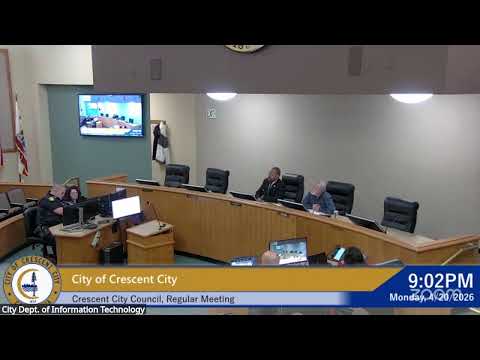
Donna Westfall, a Crescent City resident, told the City Council she will seek a temporary restraining order to stop the city’s Proposition 218 rate‑setting process, saying the city failed to provide reliable notice and refused to produce the customer mailing list she requested. “I intend to seek a temporary restraining order tomorrow to halt this Proposition 218 process due to serious violations of due process,” Westfall said, and handed 57 signatures to the council.
The council had earlier mailed separate notices for proposed water and sewer increases; Westfall and other commenters said some residents received multiple mailings while others received none. Westfall told the council she had been given 170 pages of assessor parcel numbers without names or addresses in response to a public‑records request and said that hampered residents’ ability to verify whether proper notice had been sent.
Eric Weir, Crescent City’s city manager, responded in detail, saying the city sends notices both to account holders (ratepayers) and to property owners via a county property‑owner list and that, where names differ between lists, duplicate mailings sometimes occur. “Out of an abundance of caution … we’re going to send out more than we would if we tried to eliminate duplicates,” Weir said, adding that the protest process is counted by parcel, not by the number of mailed notices.
City Attorney Rice told the council the notices explain the counting rules, and staff said a parcel that receives multiple notices still counts as a single protest if the same parcel’s occupants submit protest forms. The city’s explanation drew follow‑up questions from multiple residents seeking copies of mailing receipts and the timing of mailings.
The Prop 218 dispute overlapped with public concern about the wastewater treatment plant upgrade on the council’s agenda: several speakers said the plant’s projected costs (which residents cited from outside sources as $50–$80 million) and its beachfront location merit reconsideration. Naomi Pñena, another resident, argued the upgrade assumes a ‘stable population’ through 2050 and therefore underestimates capacity and future costs; she urged the council to consider relocation.
Staff noted that moving a wastewater treatment plant is a complex, multi‑million‑dollar undertaking that would require extensive force mains and new infrastructure and that near‑term work must balance current safety, maintenance and compliance needs with longer‑term planning. The council did not vote on Prop 218 at this meeting; public comments and staff explanations were the primary actions taken.
What’s next: The council has not closed the regulatory or legal window on protests; residents said they may seek court review if records and notice questions are not resolved. Staff said they will provide requested documentation where permissible and reiterated the parcel‑based protest counting method to the public.