Get Full Government Meeting Transcripts, Videos, & Alerts Forever!
Get email alerts on the Official Map Amendment topic
No spam. Unsubscribe anytime.
Council approves map amendment to allow Milwaukee County-Habitat workforce subdivision despite resident safety and contamination concerns
Summary
After an extended public hearing with dozens of neighbors, the Oak Creek Common Council approved an ordinance amending the official map to permit a 50-lot single-family subdivision on county-owned parcels; residents raised traffic, wetland, and contamination concerns and asked for more testing and mitigation.
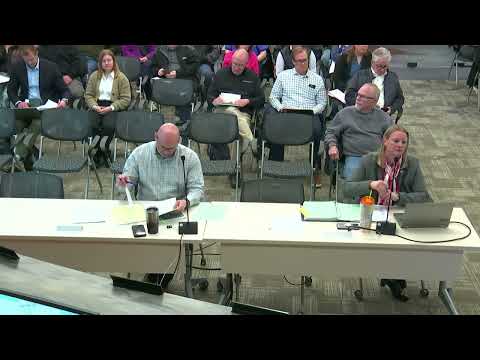
The Oak Creek Common Council on April 6 approved an amendment to the city's official map to allow a 50-lot single-family subdivision on parcels near East American Avenue and South Annette Place, a project the county says will supply workforce "starter" homes in partnership with Habitat for Humanity.
Christy Lane, community development director, told the council the county's preliminary plat covers just over 22 acres and was approved by the city's plan commission; the map change removes a historic mapped connector (shown in pink) and recognizes the developer's proposed private roadway and a temporary cul-de-sac so adjacent private property would not be landlocked.
During the public hearing, neighbors described sharply divergent views. Supporters including Rob Janowski and multiple representatives of the Oak Creek High School construction program said the development would provide starter homes for local workers and sustain the school's night-construction training. "This is a starter home for people like this," resident Rob Janowski said.
Opponents raised traffic-safety and environmental concerns. Multiple residents asked whether contamination identified by Wisconsin DNR (DNR facility cited in testimony) had been fully remediated and whether borings were deep enough. Cheryl Bassino told the council she believes contaminants in the northwest corner of the site include "highly toxic carcinogenic chemical compounds" and asked what would happen "when we start picking that ground up." Several speakers also urged traffic calming, additional sidewalks, and improvements to failing infrastructure on American Avenue.
County and developer representatives responded in public Q&A. Milwaukee County's environmental consultant said contamination was isolated to a limited area (zero to five feet depth) in the northwest corner and that the proposed plat leaves that area in an outlot rather than disturbing it. The county representative said DNR-approved remediation methods could be used if the site were later disturbed. On sewer and stormwater, Assistant City Administrator/City Engineer Matt Sullivan said the county has agreed to increase sanitary sewer size to address existing capacity and that stormwater improvements must meet Chapter 13 and MMSD approval.
Habitat for Humanity and county officials described the proposed affordability structure. Brian Sundderman (Milwaukee Habitat) said homes are planned for roughly $225,000 and will have deed restrictions to preserve affordability; the deed restriction would include a 2% annual resale increase and run for 99 years, he said. Habitat staff also described homeowner education and a low historical foreclosure rate for their projects.
After the presentations and public comments, Alderman Marshall moved to adopt Ordinance 3151 amending Section 6.01 of the municipal code to revise the official map; the council approved the measure by roll call vote. The ordinance record shows the plan commission and staff had recommended approval.
The council directed staff to follow up on questions raised during public comment, including details on contamination testing, DNR interactions, and potential infrastructure improvements. The public hearing record and staff responses will be part of the project file as the county and developer move toward final engineering and permitting.
Next steps: the county and Habitat will continue detailed site planning, environmental reporting, and design work; separate permits (site plan, subdivision engineering, stormwater approvals) remain required before construction starts.