Get Full Government Meeting Transcripts, Videos, & Alerts Forever!
Get email alerts on the School Turnaround topic
No spam. Unsubscribe anytime.
District outlines five‑year transformation plan for 12 schools, including leadership bonuses and high‑dosage tutoring
Summary
District leaders proposed a five‑year, conditions‑first strategy focused on 12 elementary/K‑8/middle schools selected by a weighted formula (70% CCPI, 20% reading, 10% suspension), with concentrated early investment in coaching, tutoring, paraprofessionals and leadership incentives.
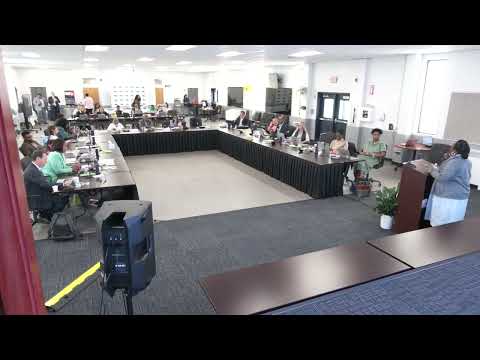
At a workshop Thursday, district staff presented a concentrated five‑year transformation strategy that would put 12 elementary and middle schools on an intensive improvement path aimed at accelerating literacy and numeracy gains and stabilizing leadership.
Dr. Barnes described the model as “conditions first,” asking for a multi‑year commitment that pairs organizational infrastructure investments with intensive coaching and supports for principals and teachers. He said schools were chosen by a weighted risk formula (70% CCRPI/CCPI performance, 20% reading‑on‑grade‑level results, 10% suspension rate) and that the list evolved after new data and a pilot year of work.
Year one and two would be the most intensive — with embedded instructional leadership coaching, leadership recruitment and retention bonuses, competency‑based staff selection, family and community engagement, high‑dosage tutoring and leadership development pathways — after which the district plans a gradual release in years three through five and an exit ramp tied to measurable progress.
On costs and specific proposals, staff outlined several asks: a leadership recruitment and retention incentive (initial/ongoing ~ $336,000 annually) intended to make the hardest‑to‑staff buildings competitive for strong principals; paraprofessional expansion and a small‑group instructional model (about $697,000); and the district’s broader tutoring expansion (a $3.1 million ask to scale what officials described as successful pilots). Staff said many vendor contracts are one‑year agreements so the district can evaluate evidence and scale down vendor support as internal capacity is built.
Board members asked how quickly leadership incentives would be tied to performance. Dr. Barnes said principals would have assigned metrics and that superintendent staff would use growth measures, climate surveys and evaluation progress to judge outcomes — and that pay incentives are intended to be outcomes‑driven. He noted leaders operate on one‑year contracts; the school might remain in the five‑year cohort while a principal could be replaced sooner if progress stalls.
Several board members and staff emphasized capacity building as a cost‑management strategy: where intensive early investment builds internal coaching and leadership capacity, the district can reduce vendor spending later while sustaining gains.
What’s next: Staff will return with implementation details, clearer cost‑benefit metrics and year‑by‑year sequencing for board review ahead of budget adoption.