Get Full Government Meeting Transcripts, Videos, & Alerts Forever!
Get email alerts on the Budget topic
No spam. Unsubscribe anytime.
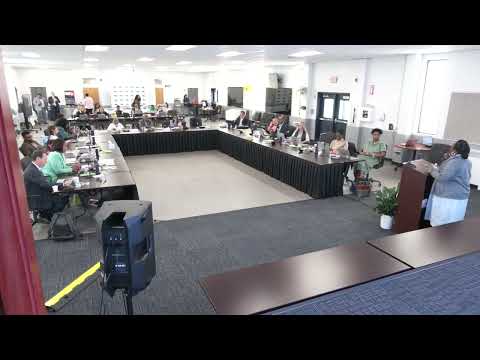
Savannah‑Chatham officials preview FY27 budget, flag $20M in program reductions as ROI guides spending
Summary
District leaders presented a preliminary FY27 budget that would raise overall spending by about 3–5% while using an ROI‑driven program inventory to identify roughly $20 million in reductions or redesigns and to prioritize new strategic investments in schools and student supports.
The Savannah‑Chatham County school district on Thursday presented a preliminary fiscal‑year‑2027 budget that staff said would increase overall spending modestly while trimming and redirecting programs through a return‑on‑investment review.
Superintendent Dr. Watts framed the workshop as a finance “workshop” focused on transparency and accountability, saying, “Every dollar has been interrogated” as staff prepared a preliminary plan that combines mandatory, baseline and strategic spending buckets. Staff described department requests totaling $210.5 million (an 8% increase over the FY26 revised budget), a preliminary school allocation of $477.2 million (up about 1%), and a preliminary district total of $687.7 million (up about 3%), numbers they called subject to revision as the process continues.
The most visible shift is not solely a top‑line ask but a new way of managing programs: Dr. Taylor said the district has created a program inventory of 111 investments, each tracked with metrics, and has used that portfolio lens to find near‑term reductions approaching $20 million. “We are moving from simply understanding ROI to implementing it into the way in which we work or operate,” she said, adding that cuts identified so far include scope adjustments, completed phases and redesigns as well as some underperforming programs.
Board members pressed staff on how reductions would be identified and monitored and on whether the savings would come disproportionately from programs or personnel. Board member Miss Campbell said she supports the ROI work but warned that the district is still analyzing only a small share of total spending: “I’m a little concerned … we’re only looking at 5% analytically” of the budget now, which she said makes large structural change to the personnel‑heavy budget difficult without a longer timeline.
Staff said program changes are only one part of the equation. They described many efficiency levers — transportation routing, purchasing and vendor management, capital lifecycle planning, Medicaid reimbursement optimization and overtime controls — that could lower cost or slow growth regardless of headcount changes.
Officials emphasized that reductions do not automatically mean service eliminations: several items flagged as “reductions” reflect completed projects (for example, installation of school audio systems) or a planned scale‑down after earlier intensive investment. Dr. Taylor said 22 programs were flagged for adjustment, caution or redesign rather than immediate sunset and that the portfolio approach is meant to force deliberate choices rather than default renewal.
Where cuts are not possible or sufficient, leaders proposed targeted strategic investments tied to measurable goals. The board saw proposals including expanded high‑dosage tutoring ($3.1 million requested to scale math and foundational tutoring), a districtwide push to adopt coherent 6–12 math instructional materials (initial estimate ~$2.5 million, with a full cost not expected to exceed $8 million), investments in leadership development and targeted recruitment/retention incentives for principals in the district’s highest‑need schools (an initial annualized incentive package cited at about $336,000), and tele‑mental‑health expansion ($150,000).
Superintendent Dr. Watts asked the board for feedback on priorities ahead of the finance committee’s next meeting; board members asked staff to present budget scenarios that show the effects of different COLA/step assumptions and of 1%–3% salary adjustments so members can weigh trade‑offs. The next formal adoption remains on the calendar for June; staff said numbers will continue to be refined in public workshops before any final vote.
What’s next: The district will continue work on ROI monitoring and return later in May with refined totals and scenario modeling that shows how salary decisions, step schedules and merit incentives would change the final tax‑supported ask.