Get Full Government Meeting Transcripts, Videos, & Alerts Forever!
Get email alerts on the Special Education topic
No spam. Unsubscribe anytime.
Speech‑language therapists urge board to prioritize in‑person services and retention
Summary
Multiple district SLPs and REA members urged the board to prioritize in‑person speech‑language services, increase compensation or extended time, preserve procedural coaches, and address staffing shortages rather than relying primarily on virtual contract services.
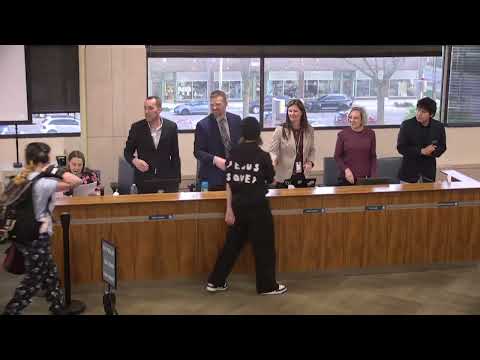
Several district speech‑language pathologists and REA members used the public‑comment period to press the Rockford Public Schools board to reduce reliance on virtual therapy and to strengthen in‑person supports.
Sarah Gray, a district speech‑language pathologist with 25 years of experience, told the board that while virtual services have provided continuity amid staff shortages, "in‑person speech and language services allow for immediate feedback, more accurate assessment of student performance, and much stronger engagement, particularly for our younger students." She said the current MOU stipend does not reflect the additional work taken on by in‑person SLPs.
Leslie Leone, also speaking as an SLP, said the district has seen a sharp decline in direct‑hire in‑person therapists over the past decade — from "over 70" in‑person therapists in the 2010s to "under 40" direct‑hire full‑time SLPs now — and urged the board and special‑education department to offer additional compensatory time (referred to in testimony as 'point 2s') to retain staff and reduce reliance on agency and virtual providers.
Elizabeth Alrich, speaking on behalf of REA grievances in the public comment slot, stressed the importance of procedural coaches to ensure legally required IEP minutes and appropriate special‑education placements. She warned that cutting procedural coaches would place case managers under greater strain and could lead to legal exposure and worse student outcomes.
Board members did not provide an on‑the‑spot response; the board policy directs that comments requiring a response be handled by the superintendent. Testimony included requests for the board to consider bargaining on compensation and staffing models to increase in‑person coverage and to preserve procedural‑coach positions.