Get Full Government Meeting Transcripts, Videos, & Alerts Forever!
Get email alerts on the Civil Rights topic
No spam. Unsubscribe anytime.
Decorah council adopts ordinance trimming local human-rights language to comply with Iowa law amid council dissent
Summary
The council voted 6–1 to amend the city’s Human Rights Commission language to comply with state Senate File 579, removing several locally enumerated protected categories; several council members voiced strong opposition, saying the change undermines local inclusivity.
The council considered a second reading of an ordinance to amend Chapter 2.50 (Human Rights Commission) to conform to Senate File 579 enacted by the Iowa Legislature. Staff explained the changes are required by state law: local commissions may no longer provide protections broader than state code, and commissioner terms must be limited to two years.
The ordinance removes references to locally enumerated categories — including ethnicity, ancestry, gender identity, organizational affiliation, socioeconomic status, public assistance, and source of income — and directs complainants to the state human rights commission for matters governed by state law. Travis noted these changes are legislatively mandated and described the ordinance as a compliance exercise.
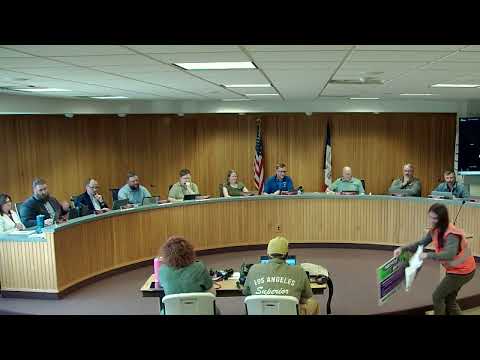
During debate several council members criticized the state law and said they would not support narrowing local language that they view as signaling community inclusion. One councilor called the change "silly business from Des Moines" and said they would vote against the ordinance; another urged residents to know they are welcome despite the code change. After discussion the ordinance passed on a roll-call vote 6–1.
The ordinance is now in effect as local code amended to meet state requirements; council members asked staff to continue to emphasize inclusive practices in day-to-day operations despite the statutory constraint on code language.