Get Full Government Meeting Transcripts, Videos, & Alerts Forever!
Get email alerts on the Land Use Data Centers topic
No spam. Unsubscribe anytime.
Lee County adopts data‑center standards after hours of public comment
Summary
After a lengthy public hearing and technical presentations, the Lee County Board of Commissioners voted to add “data center” to the county’s Unified Development Ordinance and adopt supplemental standards covering setbacks, noise, water and decommissioning; opponents urged a moratorium and stronger penalties while industry and utilities called the rules workable.
The Lee County Board of Commissioners voted April 20 to add “data center” as a permitted land use in the county Unified Development Ordinance and to adopt detailed supplemental development standards intended to protect neighbors and public infrastructure.
The action followed a multi‑hour staff presentation and a protracted public hearing in which business and technical experts praised the county’s draft rules while many residents and environmental advocates urged more time, higher penalties and a moratorium on data‑center approvals.
Why it matters: Commissioners and planning staff said the ordinance provides a predictable, enforceable framework for projects that can carry large electrical and water demands. Supporters said clear rules let the county evaluate applicants and require developers to demonstrate they can be served by municipal water and electricity, and to mitigate noise and lighting impacts. Opponents argued the county should wait for stronger state or regional rules and asked for higher civil penalties and decommissioning bonds.
What staff recommended: Planning staff presented a text amendment that creates a data‑center definition and requires site‑specific standards including enhanced setbacks and buffers, a requirement that applicants supply will‑serve letters from utilities and public water providers, a third‑party acoustical pre‑construction noise study and a post‑construction verification process, limits on generator testing, and decommissioning language that requires removal of hazardous materials within a stated period. Staff also recommended removing a proposed one‑time $10,000 civil penalty and instead applying the UDO’s standard enforcement penalties (generally $100 per day) to avoid legal exposure when applying different fines to a single land use.
Selected testimony: Local economic development advocate Kirk Bradley said, “Data centers represent one of the few opportunities to generate significant tax revenue without putting additional strain on schools or roads.” Residents and environmental groups countered. Kristen Herman told the board she “strongly oppose[d] the data center,” saying the proposal raised water, generator and fracking risks. Consultant Andrew Walzer, a registered professional engineer, told commissioners modern design typically uses “closed loop non‑evaporative, air‑cooled systems” that can greatly reduce water use if the systems are appropriately specified and verified.
Utility and enforcement assurances: Central Electric Membership CEO Eddie Odom testified that large‑load customers are assessed system capacity and required to pay for needed infrastructure upgrades up front; he said such projects typically include long‑term contracts and dedicated metering to protect existing ratepayers. Staff said the ordinance requires will‑serve confirmations from utilities and municipal water providers before project approval.
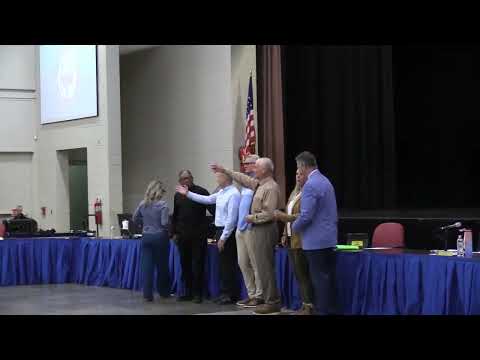
Board action and process notes: Commissioners first waived an internal policy so they could act the same night as the public hearing, and recused one commissioner who had an acknowledged conflict. The motion to adopt the UDO amendments passed after discussion; at least one commissioner recorded opposition to some elements while the planning board recommendation was largely upheld. Staff will now publish the adopted ordinance language and incorporate the procedural steps for implementation and post‑construction verification. The county emphasized the new rules apply to future applications; projects that file complete permit applications under prior rules may be governed by the standards in place at the time of application.
What’s next: Staff will implement the enforcement and review procedures described in the standards, maintain a list of retained third‑party acoustical reviewers for post‑construction checks, and require utility and water capacity letters on future applications. Several residents asked the board to revisit penalty levels and decommissioning bond language in subsequent text amendments; commissioners said the UDO can be amended again if needed.
The ordinance vote does not approve any specific project; any future data‑center proposal will still need to meet the ordinance’s supplemental standards and applicable permits before construction.