Get Full Government Meeting Transcripts, Videos, & Alerts Forever!
Get email alerts on the Baby Bonds topic
No spam. Unsubscribe anytime.
Connecticut Baby Bonds: treasurer outlines eligibility and uses, says thousands are enrolled
Summary
Treasurer Eric Russell described Connecticut's Baby Bonds program — automatic $3,200 accounts for children born into poverty (Husky-covered births) — and explained eligibility, permitted uses and early enrollment counts.
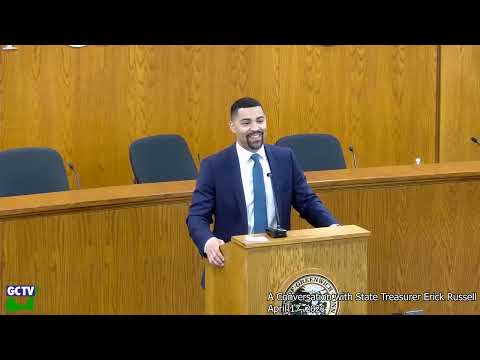
Treasurer Eric Russell described Connecticut's first-in-the-nation Baby Bonds program at a Greenwich town hall, saying the initiative automatically seeds eligible newborns' accounts and aims to address long-term wealth inequality.
"For every child who is born into poverty, which we use if their birth is covered by the state's Medicaid program Husky, there's automatically $3,200 that's invested in a trust on behalf of that child," Russell said. He said the accounts are invested alongside the state's pension assets and may be accessed between ages 18 and 30 for wealth-building purposes.
Russell explained access rules: beneficiaries must be Connecticut residents at the time they access funds and must complete a financial education course. If funds are used to purchase a home or start a business those uses must be Connecticut-based; education-related uses can be applied to out-of-state institutions.
Russell said roughly 43,000 children had become eligible in the program's first 2½ years. He also said the program was seeded with roughly $398 million and that the balance had materially increased since launch, supporting the program's long-term aims to help young people stay and build livelihoods in Connecticut.
Russell framed the program as both an equity initiative and an economic development measure designed to keep young people in-state. "It's about investing in the future economy of Connecticut," he said, adding the administration is working with philanthropy and community partners to provide wrap-around services tied to the accounts.
He answered audience questions about residency rules and confirmed the residency requirement is assessed when funds are accessed, not at birth.