Get Full Government Meeting Transcripts, Videos, & Alerts Forever!
Get email alerts on the Trees And Environment topic
No spam. Unsubscribe anytime.
Residents and Shade Tree Commission debate proposed tree-removal ordinance
Summary
Public comment at the April 20 meeting featured support from Shade Tree Commission members for a revised tree-removal permit ordinance aimed at simplifying the process and protecting the borough's tree canopy, while some residents opposed added fees and administrative hurdles.
A proposed revision to Fanwood's tree-removal permit ordinance drew both endorsement and opposition during public comment on April 20.
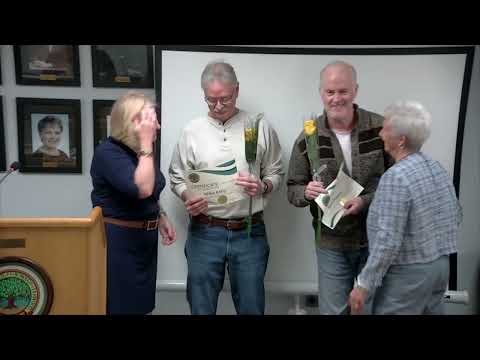
Steve Falco, a long-time Shade Tree Commission member, said the existing ordinance is "complicated and very cumbersome" and praised borough engineer Antonio (and a small committee) for producing a simplified draft with clearer fees and penalties. Falco read the ordinance's stated purpose, saying it aims "to establish requirements for tree removal and replacement in the Borough of Fanwood to reduce soil erosion and pollutant runoff, promote infiltration of rainwater into the soil, and to protect the environment, public health, safety, and welfare, and to maintain the borough's tree canopy."
Leslie Cron and Laura Lang (Green Team) also voiced support, noting the ordinance adds clarity, includes certifying trees as diseased or hazardous before removal, and should be paired with public education rather than Facebook arguments.
Opponents, including resident Michael Lewis, said the changes would burden responsible property owners with fees and extra procedural steps that would not deter developers or others who consider fines "a cost of doing business." Lewis asked whether current borough rules already complied with state regulations and urged clearer communication about what constitutes allowable tree removal on private property.
Council members and staff said the revision process was prompted in part by new state guidance and a desire to align local code with model language; they said the committee has not finalized redlines, and that additional public hearings would follow introduction. The council did not vote on the ordinance at the April 20 meeting; officials indicated further work and public education are expected before formal introduction and adoption.