Get Full Government Meeting Transcripts, Videos, & Alerts Forever!
Get email alerts on the Education Curriculum topic
No spam. Unsubscribe anytime.
Revere Local board approves updated ELA curricula for third grade and grades 6–8
Summary
The Revere Local Board of Education approved, as part of a consent package, adoption of Great Minds’ Arts & Letters for third grade and HMH’s Into Literature for grades 6–8 after teachers piloted the materials and cited improved literary balance, writing instruction and digital supports.
The Revere Local Board of Education on April 21 approved updated English language arts curricula for third grade and for grades 6–8 as part of a consent agenda that bundled multiple routine items.
Teachers and curriculum leaders presented pilots of Great Minds’ Arts & Letters (an update to Wit & Wisdom) for third grade and HMH’s Into Literature for middle school, saying the materials increase exposure to literary texts, embed writing instruction and include teacher-friendly assessments and digital resources. The board placed the curriculum recommendations on the consent agenda and approved them without separate roll-call votes.
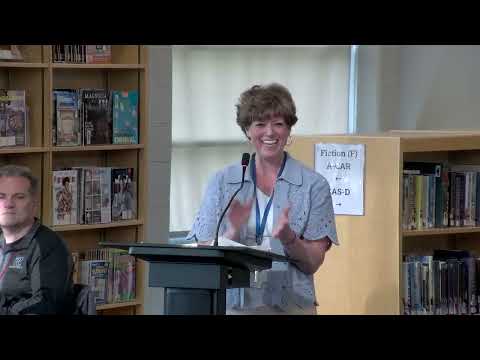
Kaylee McCosland, a third-grade ELA teacher who participated in the pilot, told the board Arts & Letters ‘‘exposes our students to a lot of different things’’ while keeping rigor aligned to district standards and providing digital and printable teacher resources. She highlighted the program’s writing scaffold — the program’s so-called ‘‘painted essay’’ that teaches simple thesis construction and proof paragraphs — as a key benefit for young writers.
Presenters said the third-grade pilot helped close gaps they had identified under the district’s prior program: teachers noted Wit & Wisdom’s strong nonfiction emphasis left some students with less literary exposure and fewer embedded writing routines. McCosland said the Arts & Letters materials include more literary mentor texts and scaffolded writing practice, along with digital tools and graphic organizers to support differentiation.
For grades 6–8, presenters described Into Literature as a comprehensive program combining print workbooks and an online platform, with units built around a mix of short and long texts and frequent speaking, listening and writing tasks. The middle-school team said the program supports backward-design pacing, includes consumable student workbooks to encourage annotation, and offers flexible assessments and accommodations in the digital platform.
Board members asked about pacing (the presenters recommended 60-minute lessons in third grade rather than 90 minutes used previously), whether consumable workbooks would travel home with students, and how novel choices would be handled. Presenters said classrooms would have extras for students who need to take materials home and that teachers would use team-developed pacing guides and professional development from HMH to align instruction.
District leaders said they plan a five-year bundle of print and digital materials, professional development and a reflect-and-refine window to adjust novels, pacing and supplemental resources. Materials and sample copies will be available at central office for review in the coming month.
The curriculum recommendations were approved as part of the board’s consent motions; the board did not separate the items for individual recorded votes. The district will begin implementation planning with teachers and scheduling professional development before wider rollout.