Get Full Government Meeting Transcripts, Videos, & Alerts Forever!
Get email alerts on the Municipal Budget topic
No spam. Unsubscribe anytime.
Presenter says pilot tax breaks failed as Hackensack City faces 10.25% levy increase
Summary
A presenter for Hackensack City outlined drivers of a proposed 2026 municipal levy increase—citing falling commercial valuations, tax appeals, expanded long-term pilot agreements that remove properties from the tax rolls, a $900,000 sewer-rate spike from the Bergen County Utilities Authority and expired SAFER grant funding for five firefighters.
Presenter for Hackensack City outlined the administration's proposed 2026 budget and said the city is confronting falling commercial valuations, higher health‑benefit costs and a large sewer rate increase that together necessitate a 10.25% increase to the municipal levy.
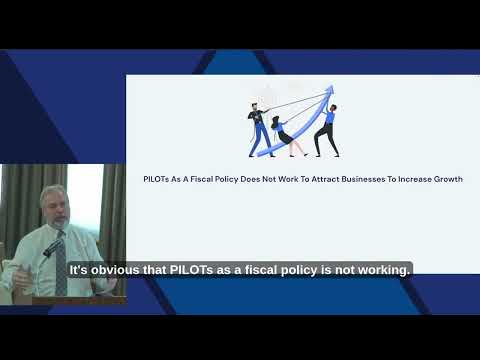
The presenter said valuations fell after 2015 through 2021, then dropped again beginning in 2022; commercial valuations fell for three consecutive years through 2024. He attributed the drop to two main causes: successful tax appeals that reduced assessments and long-term "pilot" agreements that remove commercial property from the tax rolls. "Pilots as a fiscal policy is not working," the presenter said, noting 18 pilot awards were granted through 2021 and 10 more were awarded between 2021 and 2026, three of which were later rescinded.
The presenter identified several near-term cost drivers. He said monthly municipal "claims" averaged a 94% increase in 2025 compared with 2024 through midyear, with spending easing beginning in July. Of a $7.1 million increase he cited, $6.3 million was for health benefits. He also said the city's bill from the Bergen County Utilities Authority (BCUA), which treats the city's sanitary sewage at a plant in Little Ferry, rose by about $900,000 because of a BCUA rate increase despite lower actual usage.
The presentation noted some spending categories under the city's control declined: non‑personnel spending was down roughly $100,000 and the budget reflects personnel adjustments such as elimination of the police director position and converting a DPW superintendent from one full‑time role to two part‑time roles to save on health benefits. The presenter said a SAFER grant awarded in 2022 that paid five firefighter salaries for three years has expired, meaning those salaries must be absorbed into the 2026 budget.
The presenter said a $1.6 million missed revenue projection in last year's budget also contributed to the need for higher revenue this year. He translated the levy increase into a municipal impact of about $48.13 per month on the average home, and emphasized that the "10.25%" figure refers to the levy increase, not a direct multiplication of a household's entire tax bill.
During a question-and-answer exchange, a Questioner asked why the city continued issuing pilots after valuations dropped and accused the prior governing body's 2025 budget choices of prioritizing optics over fiscal prudence. The presenter repeatedly agreed that the pilot policy had not attracted net ratables and called the Questioner's point "excellent." The presenter also recommended replenishing the snow‑removal trust, which he described as "uncomfortably low," and said the city had reduced its annual donation to the library for several years before a small increase this year.
The transcript includes no formal motion or recorded vote on the 2026 budget in the provided segments. The governing body and administration discussed causes of rising costs, options to rebuild reserves and messaging about how levy changes translate to individual taxpayers; next procedural steps or a formal adoption were not recorded in these segments.