Get Full Government Meeting Transcripts, Videos, & Alerts Forever!
Get email alerts on the Corridors Of Commerce topic
No spam. Unsubscribe anytime.
Advocates urge continued trunk‑highway bond support for Corridors of Commerce
Summary
Presenters told the Senate Transportation Committee the Corridors of Commerce program has produced measurable freight and safety benefits and urged new trunk-highway bond authority in the capital bonding bill.
St. Paul — Advocates for the Corridors of Commerce program told the Senate Transportation Committee on April 22 that continued trunk-highway bond authority is needed to maintain recent gains in freight movement, safety and economic development.
“My name is Margaret Donahoe, executive director of the Minnesota Transportation Alliance,” Donahoe said in the hearing packet. She told senators Corridors of Commerce has invested about $1.8 billion since 2013 — roughly $200 million per year over nine years — and she urged inclusion of trunk-highway bonds in the upcoming capital bonding bill to keep high-priority projects moving.
Donahoe cited completed projects on I‑94, Highway 35W and others as examples of reduced fatalities and improved freight movement. She said the program ranks projects statewide and allocates funds to those with the highest documented need.
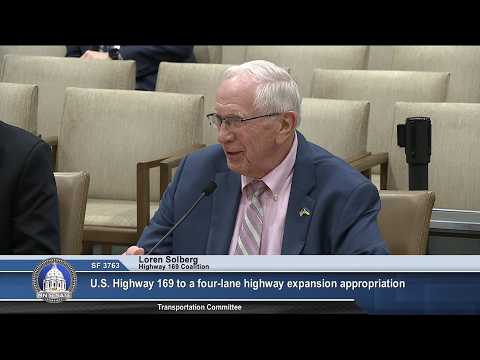
Testimony from local coalition leaders reinforced the pitch. A representative from the Highway 23 Coalition described safety improvements, passing lanes and bypasses funded through Corridors of Commerce and asked the committee to allocate $400 million in trunk-highway bonds and cash to the program to close gaps on Highway 23 and similar corridors.
Why it matters: Corridors of Commerce projects combine trunk-highway and local investments to address congested freight corridors, reduce serious crashes and support regional economic development. Advocates said continued state bond authority will be necessary to match federal and local commitments and avoid losing time-limited grants.
Next steps: The committee did not adopt a funding decision at the hearing. Advocates expect their testimony to be considered during bonding debates and in negotiations over trunk-highway bond authority for the capital bill.