Get Full Government Meeting Transcripts, Videos, & Alerts Forever!
Get email alerts on the Immigration Enforcement On City Facilities topic
No spam. Unsubscribe anytime.
Campbell council asks staff to draft resolution limiting use of city facilities for immigration enforcement
Summary
After a staff presentation and extensive public comment on April 21, the Campbell City Council directed staff to draft a resolution that would prohibit use of city-owned property for civil immigration enforcement and to return to the council—staff said by the end of May—with an implementation plan; a separate ordinance to restrict masked or unidentifiable officers was discussed but will require additional review.
Campbell — The City Council on April 21 directed staff to draft a resolution that would prohibit use of city-owned or city-controlled facilities for civil immigration enforcement activity and asked the city manager’s office to return with proposed language and an implementation timeline, city staff said.
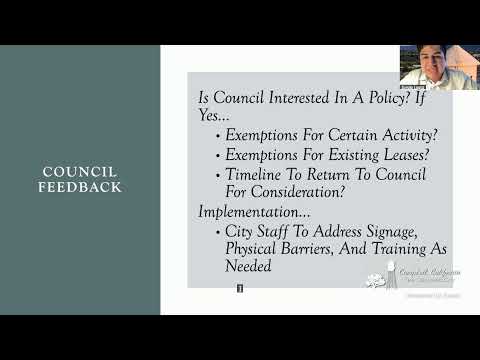
Assistant City Manager Angelique Gator told the council that staff reviewed policies adopted by nearby jurisdictions, including San Jose and Santa Clara, and identified common elements: a direct prohibition on staging or processing on city property, narrowly defined exemptions (judicial warrants and criminal enforcement), a property inventory to identify affected sites, signage, possible physical barriers where appropriate, and staff training and reporting protocols. "These are all components of the policies that were adopted by these three cities," Gator said in the presentation.
Why it matters: dozens of residents, advocates and educators urged the council to act quickly, citing fear in immigrant communities and requesting protections for staff and the public ahead of large summer events. "A strong policy will assure community members and employees that the city of Campbell is committed to the safety and well-being of the community," said Matt Hammer, who works with the countywide Immigrant Protection and Empowerment Network; he urged the council to complete implementation before international events in June.
Public comment and community concerns: speakers during the public hearing urged a comprehensive policy. Eugene Hill recounted a personal experience and asked the council to make sure "your building permit office does not give a list of currently active building permits to the Immigration and Customs Enforcement Organization," saying such lists have been used to identify and detain workers. Linda Babcock, Stephanie Snow (an educator) and others said protections would reduce fear among children and families. Ami, representing the Immigrant Protection and Empowerment Network, offered technical assistance and noted the group's experience working with San Jose and Santa Clara on similar measures.
Council debate and distinctions between a resolution and ordinance: councilmembers expressed broad support for a statement that would bar civil immigration enforcement activity on city property, but they divided on optional measures. Several members supported a requirement that officers display name or badge; staff noted the state already requires identification by name or badge, so a local ordinance that repeats that requirement would largely codify existing law. A separate question was whether to pursue a mask ban (a rule that would require law-enforcement officers to show their faces during enforcement actions). Councilmembers agreed the "mask" question would need legal review and is best pursued as an ordinance that requires a first and second reading; the city attorney must review the language to ensure consistency with recent court rulings.
Concerns about signage, physical barriers and budget: multiple councilmembers warned that posting signs or erecting physical barriers at city facilities could be costly, time-consuming and might create a misleading sense of security or urban blight. "I don't support going beyond" a basic policy now, one councilmember said, citing limited staff capacity and budget constraints. Others argued that some combination of signage, staff training and targeted site protections would provide practical protections and legal footing if enforcement activity occurs.
Next steps and timeline: staff told the council it could return with a draft resolution quickly and said it aims to bring a resolution back before the end of May; an ordinance addressing a mask ban would take longer because it requires city-attorney review and two readings. The council did not take a formal vote tonight; instead members expressed the will of the majority to move forward with a resolution prohibiting use of city facilities for civil immigration enforcement and asked staff to analyze affected properties (including existing leases) and to report back.
What was not decided: the council did not adopt final language or a binding ordinance tonight, and it did not formally adopt signage or barrier plans. Councilmembers asked staff to analyze leases and confirm how county-run facilities (such as the library) would interact with a city policy. Staff said some leased properties already have agreed-upon terms and that a full lease analysis could require additional time.
The meeting closed with the mayor thanking residents and staff; staff will return with a draft resolution and implementation recommendations for council consideration at a future meeting.