Get Full Government Meeting Transcripts, Videos, & Alerts Forever!
Get email alerts on the Labor And Worker Protections topic
No spam. Unsubscribe anytime.
Boston labor office previews FY27 budget, outlines heat-illness rules and worker-rights outreach
Summary
The Office of Labor Compliance and Worker Protections told the Council its FY27 operating budget is about $1.8 million, described steps to implement the city's Heat Illness and Injury Prevention Ordinance and summarized a Worker Rights Initiative that has funded multilingual clinics and training.
The Boston Office of Labor Compliance and Worker Protections told the City Council's Ways and Means committee on April 23 that its FY27 operating budget is about $1.8 million and described steps to implement a new heat-illness ordinance, expand multilingual worker training and run the city's resident-jobs compliance program.
"We protect and promote labor standards and policies that create fair workplaces for all workers," Jody Sugarman, deputy chief in the Worker Empowerment Cabinet and director of the office, told the committee. Sugarman said about 64% of the office's budget funds the Boston Resident Jobs Policy (BRJP) program and that the office monitored 166 BRJP projects in the most recent fiscal year.
Why it matters: the office enforces local wage and hiring rules that apply to large private projects and service contracts. Councilors pressed staff for numbers and for assurances the office can sustain training and outreach amid modest budget cuts.
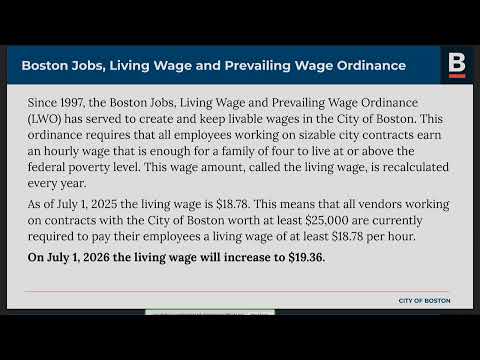
Monique Mitchell, the office's senior program manager for living wage and wage-theft work, described the city's living-wage and prevailing-wage rules and said the living wage will increase to $19.36 per hour effective this July. Mitchell said the office monitors more than 500 vendors and about 1,000 contracts that trigger living-wage requirements.
The presenters said BRJP targets for covered projects remain substantial: in recent months they reported about 19% of work hours went to Boston residents, 42% to people of color and 7% to women. The office also maintains a jobs bank with roughly 400 registered workers and said it received 11 labor requests through that bank during the fiscal year.
On enforcement, Mitchell said the office received 22 wage-theft complaints this year and referred about 20 to the Massachusetts Attorney General's labor division; seven complaints remain under review. The office also runs multilingual OSHA-10 and OSHA-30 training, reporting more than 600 workers trained across English, Spanish, Portuguese and Haitian Creole offerings.
Sugarman outlined the Heat Illness and Injury Prevention Ordinance implementation plan: the office used Bureau of Labor Statistics data to identify covered contract categories, drafted a required heat-illness prevention affidavit for contractors, contracted a vendor to run three in-person train-the-trainer sessions for City managers, and scheduled webinars for covered contractors on May 4, May 27 and June 2. The City also created a worker-facing website, boston.gov/heat-protection.
The office said it has provided $273,375 in FY25–26 funding to worker centers and partner organizations to support multilingual in-person trainings and outreach clinics, and reported dozens of worker referrals to enforcement partners through that work.
Councilors asked how a $27,000 reduction in the office's proposed budget would affect services; Sugarman said the cut is largely in contractual services and would reduce the number of free trainings and multilingual outreach sessions the office can provide.
Next steps: staff said they will continue implementation of the heat ordinance, hold the scheduled training sessions and follow up with Councilors on specific program and complaint metrics.